
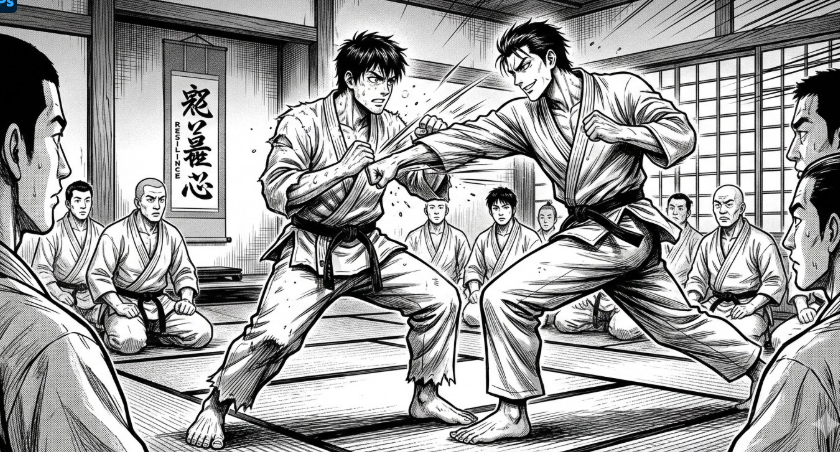
Réflexions Martiales d’un Hypnofighter #528 :  L’Art de Changer de Dojo : Un Nouveau Départ Martial

Nous sommes passionnés d’arts martiaux, et il arrive que notre quotidien change, rendant les horaires de notre académie habituelle inadaptés. Il est également possible que nous déménagions ou que nous choisissions, pour différentes raisons, de rejoindre une autre école.

Quand nous entrons dans un nouveau dojo, surtout si nous sommes gradés, il est toujours un peu difficile de se faire une place. Ce n’est pas que les gens soient méchants ou inhospitaliers, c’est juste que vous intégrez un autre mode de fonctionnement et que, inconsciemment, vous portez un biais de confirmation lié à votre ancrage précédent. La problématique de ce biais est que nous nous référons systématiquement à la première chose que nous avons apprise.

Nous sommes conditionnés par une façon d’aborder l’art martial et de vivre ses sessions, d’autant plus quand cela fait plusieurs années que vous étiez dans une salle que vous affectionniez. Il y a donc une période de transition qui dure quelques semaines, parfois quelques mois, avant de commencer à se sentir pleinement intégré.

Sans parler des combats, que ce soit dans les styles de percussions (boxes) ou de préhension (luttes). Parfois, ces échanges servent à rappeler : « Tu es bien gentil, mais tu n’es pas de chez nous ; on va voir si ton ancien club forme vraiment des gens forts. » C’est assez amusant, car on se retrouve dans une sorte de conflit d’ego qui n’est pas directement orienté contre nous, mais plutôt contre ce que nous représentons.

Puis, semaine après semaine, les rencontres deviennent régulières. Même si parfois l’ambiance est difficile à accepter — simplement parce que nous apprenons quelque chose de nouveau ou rencontrons de nouvelles personnalités — un affect se crée, une compréhension mutuelle s’installe. Il y a ensuite la résultante du combat : il devient de plus en plus sain, de plus en plus sincère, et parfois, sans même plus discuter qu’en combattant, on commence à faire sa place.

On finit par se comprendre avec des personnes avec qui, pendant des mois ou des semaines, il n’y a eu que des échanges martiaux. Pourtant, elles semblent désormais bien plus proches et accueillantes qu’au départ.

Prenez ce qui est bon et juste pour vous. Be One, Pank.https://www.passioncombat.net/

Martial Reflections of an Hypnofighter #528:  The Art of Changing Dojos: A New Martial Beginning

We are passionate about martial arts, and sometimes our daily lives change, making the schedule of our usual academy no longer suitable. It is also possible that we move or choose, for various reasons, to join another school.

When we enter a new dojo, especially if we hold rank, it is always a bit difficult to find our place. It’s not that people are mean or unwelcoming; it’s just that you are entering a different way of operating, and unconsciously, you carry a confirmation bias linked to your previous anchoring. The problem with this bias is that we systematically refer to the first thing we learned.

We are conditioned by a certain way of approaching martial arts and experiencing sessions, especially when you have spent several years in a gym you were fond of. Therefore, there is a transition period that lasts a few weeks, sometimes a few months, before starting to feel fully integrated.

Not to mention the sparring, whether in striking styles (boxing) or grappling styles (wrestling). Sometimes, these exchanges serve to remind you: « You’re nice, but you’re not one of us; we’ll see if your old club really trains strong people. » It’s quite amusing because we find ourselves in a sort of ego conflict that isn’t directly directed against us, but rather against what we represent.

Then, week after week, encounters become regular. Even if the atmosphere is sometimes hard to accept—simply because we are learning something new or meeting new personalities—a bond forms, a mutual understanding settles in. Then there is the result of the sparring: it becomes healthier and healthier, more and more sincere, and sometimes, without even needing to speak other than through fighting, you begin to find your place.

You eventually understand the people with whom, for months or weeks, there were only martial exchanges. Yet, they now seem much closer and more welcoming than they did at the beginning.

Take what is good and right for you. Be One, Pank.
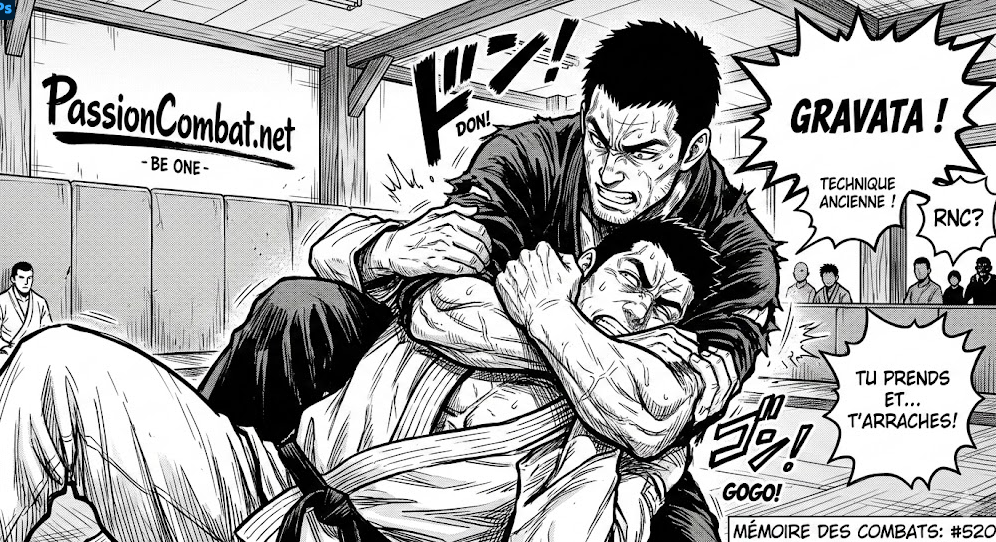
Réflexions Martiales d’un Hypnofighter #520 : La Gravata

Hier, au dojo, on parlait des “guillotines” en Luta Livre et BJJ. J’expliquais qu’il y a encore quelques années, il n’y avait pas de terminologies comme Anaconda (nommé par Milton Viera) ou Brabo. La plupart du temps, c’était « la guillotine ». Ce sont les Américains qui ont commencé à donner des noms à toutes les techniques. 

D’ailleurs, le Brabo Choke s’appelle aussi la D’Arce. Cela a facilité la compréhension de quel type de guillotine (ou autres techniques) on enseigne et on demande en combat. La guillotine étant, de plus, un étranglement, un contrôle de tête ou une clé de cervicale : le fameux “tu prends et… t’arraches”. 

Ce qui est curieux dans l’ouvrage Choque (qui reprend les articles des affrontements interstyles et du développement des arts martiaux depuis le début du 20e siècle au Brésil), c’est que la technique qui était la plus souvent utilisée était la Gravata. 

Comme il y avait des lutteurs, des catch wrestlers, des lutadors et des jiujitsukas/judokas, cette technique ressort sur beaucoup de soumissions. Et la Gravata est une guillotine, souvent prise sur les takedowns ou en quadrupédie. Ce que le jiu-jitsu des Gracie, comme celui des Japonais sur place, a un peu changé, c’est que, plus spécifiquement pour la tendance Helio Gracie, on restait sur le dos ; donc la guillotine était moins fréquente dans ces matchs. 

Par contre, la prise de dos pour l’étranglement (je n’ai pas de détail, mais on peut imaginer depuis le dos au sol) était la technique qu’aussi bien Helio que George Gracie affectionnaient. Le seul souci, c’est qu’il n’est pas certain que ce soit un RNC (Rear Naked Choke) comme on le connaît aujourd’hui, parce que la Gravata, comme la guillotine, était aussi considérée par moments comme un étranglement… 

L’évolution des noms est une bonne chose pour que nous puissions avoir une vision juste des techniques utilisées. Ça nous permet de mieux comprendre l’histoire du combat. 

Prenez ce qui est bon et juste pour vous. Be One, Pank. https://www.passioncombat.net/

Martial Reflections of an Hypnofighter #520: The Gravata

Yesterday at the dojo, we were talking about “guillotines” in Luta Livre and BJJ. I explained that just a few years ago, there were no terminologies like Anaconda (named by Milton Viera) or Brabo. Most of the time, it was « the guillotine. » It was the Americans who started giving names to all the techniques.

By the way, the Brabo Choke is also called the D’Arce. This made it easier to understand what type of guillotine (or other techniques) is taught and requested in combat. The guillotine is, furthermore, a choke, a head control, or a neck crank: the famous « you grab and… you tear off. »

What is curious in the book Choque (which collects articles on interstyle matches and the development of martial arts since the beginning of the 20th century in Brazil), is that the technique that was most often used was the Gravata.

Since there were wrestlers, catch wrestlers, lutadors, and jiujitsukas/judokas, this technique stands out in many submissions. And the Gravata is a guillotine, often taken during takedowns or from the turtle position. What the Gracie Jiu-Jitsu, like the Japanese version there, changed a bit, is that, specifically for the Helio Gracie style, they preferred to stay on their back, so the guillotine was less frequent in those matches.

On the other hand, the back mount for the choke (I don’t have details, but one can imagine from the back on the ground) was the technique that both Helio and George Gracie were fond of. The only problem is that it is not certain that it was a RNC (Rear Naked Choke) as we know it today, because the Gravata, like the guillotine, was also considered at times an strangulation…

The evolution of names is a good thing so that we can have an accurate vision of the techniques used. It allows us to better understand the history of combat.

Take what is good and right for you. Be One, Pank. https://www.passioncombat.net/
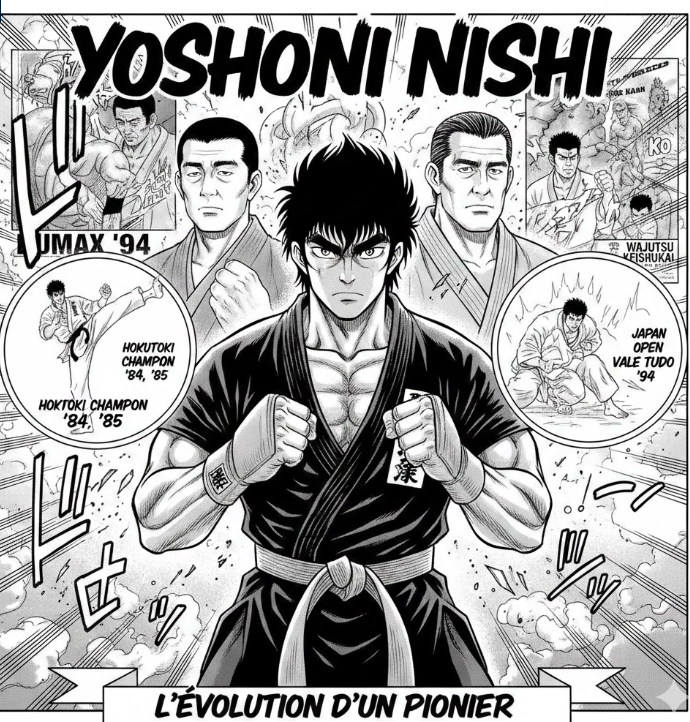
Réflexions Martiales d’un Hypnofighter #518 : Yoshinori Nishi

Vous ne vous souvenez probablement pas de ce combattant, d’autant plus si vous n’êtes pas un passionné de combat libre. En me penchant un peu sur le Daido Juku, ce karaté de Shihan Azuma qui est devenu le Kudo, je suis revenu sur les premiers pratiquants et champions. Nishi était l’un des grands de ce style, remportant en 1984 et 1985 le championnat Hokutoki.

Je reviendrai sur des éléments importants du Daido Juku, issu du Kyokushin, dans d’autres articles. Nishi a été formé au Judo par Kimura (la légende du Judo), puis rapidement au Kyokushinkai et surtout au Daido Juku vers 1983. Ce qui m’intéresse chez ce combattant, c’est qu’il a tenté de combattre dans des disciplines diverses. Il a notamment remporté le LUMAX, qui était déjà une sorte de MMA en tournoi, un peu comme l’UFC, en 1994. Quelques années auparavant, il avait combattu Rob Kaman (1990) en Kickboxing, où il subira un KO.

Il a été connu pour avoir affronté Rickson Gracie au premier Japan Open Vale Tudo de 1994. Il a rapidement perdu le match sans avoir pu s’exprimer. Ce qui est intéressant, c’est que la même année, nous avions un autre combattant du Daido Juku, d’ailleurs le premier Japonais à l’UFC, qui a perdu contre Royce Gracie : Minoki Ichihara.

Si Azuma a cherché en réponse à intégrer plus de sol et même à faire évoluer son Daido Juku, Nishi est parti dans une quête au travers de sa très célèbre école Wajutsu Keishukai. Il y a quelques années, j’avais lu qu’il avait été « coupé sous le pied » par les Gracie, parce qu’il s’était mis en tête de redévelopper le Jiujitsu au Japon. La réalité est plus simple : élève de Kimura, il a profité de sa rencontre avec un Gracie pour aller au Brésil faire une « recherche » sur la forme de Jiujitsu d’Helio Gracie, et savoir si la forme qu’ils avaient apprise était celle de la forme « originelle » du jiujitsu.

Chose que nous savons n’être pas le cas, car les Gracie ont été formés par Donato Pires, de la lignée Maeda, qui pratiquait un Kodokan Jiujitsu (les prémices du Judo). Nishi a orienté sa forme de combat vers le MMA, mettant de côté son Karategi et formant des combattants réputés dans les années 2000.

Il a vécu une période cruciale des arts martiaux modernes et, comme Azuma ou Sayama avec le Shooto, il y a eu une décision de se tourner vers l’efficacité et la mise à jour du combat plutôt que de rester dans la « tradition ».

Prenez ce qui est bon et juste pour vous. Be One, Pank.  https://www.passioncombat.net/

Martial Reflections of a Hypnofighter #518: Yoshinori Nishi

You probably don’t remember this fighter, especially if you’re not a free combat enthusiast. Going back a bit into Daido Juku, Shihan Azuma’s Karate which became Kudo, I revisited the early practitioners and champions. Nishi was one of the greats of this style, winning the Hokutoki championship in 1984 and 1985.

I will come back to important elements of Daido Juku, stemming from Kyokushin, in other articles. Nishi was trained in Judo by Kimura (the Judo legend), then quickly in Kyokushinkai and especially Daido Juku around 1983. What interests me about this fighter is that he tried to compete in various disciplines. He notably won the LUMAX, which was already a kind of MMA tournament, a bit like the UFC, in 1994. A few years before, he had fought Rob Kaman (1990) in Kickboxing, where he suffered a KO.

He was known for facing Rickson Gracie at the first Japan Open Vale Tudo in 1994. He quickly lost the match without being able to express himself. What’s interesting is that the same year, we had another Daido Juku fighter, actually the first Japanese in the UFC, who lost against Royce Gracie: Minoki Ichihara.

While Azuma sought to integrate more ground fighting and even evolve his Daido Juku in response, Nishi embarked on a quest through his very famous Wajutsu Keishukai school. A few years ago, I had read that he had been « undermined » by the Gracies because he had set out to redevelop Jiujitsu in Japan. The reality is simpler: a student of Kimura, he took advantage of his meeting with a Gracie to go to Brazil to do « research » on Helio Gracie’s form of Jiujitsu, and to know if the form they had learned was the « original » form of jiujitsu.

Something we know is not the case, as the Gracies were trained by Donato Pires, from the Maeda lineage, who practiced Kodokan Jiujitsu (the beginnings of Judo). Nishi oriented his fighting style towards MMA, setting aside his Karategi and training renowned fighters in the 2000s.

He lived through a crucial period of modern martial arts and, like Azuma or Sayama with Shooto, there was a decision to turn towards efficiency and updating combat rather than staying in « tradition ».

Take what is good and right for you. Be One, Pank.  https://www.passioncombat.net/
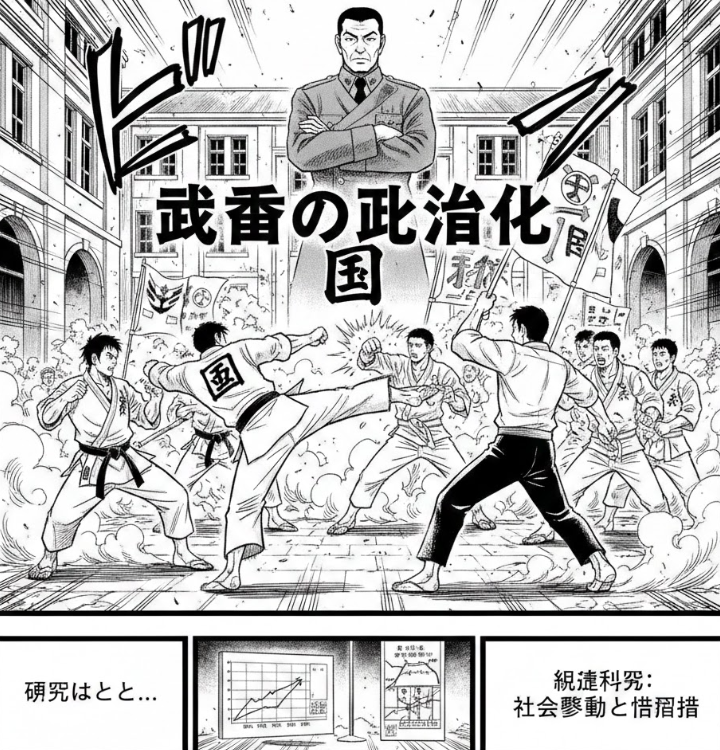
Réflexions martiales d’un Hypnofighter #513 : Les arts martiaux politisés

Les rixes et combats violents, voire mortels, font partie de l’histoire des arts martiaux. Nous pouvons facilement oublier que les boxes ou les luttes, sans même parler des armes, ont pour objectifs le combat, la domination physique et psychologique sur les opposants.

Quand on lit ce qui se passe régulièrement, avec des conséquences comme la mort de groupes politiques des deux côtés de l’échiquier, c’est malheureusement ce à quoi le combat peut mener.

Et les arts martiaux sont souvent associés à des idées nationalistes. On l’oublie parfois avec la mondialisation des systèmes et des cultures, mais pour reprendre le Japon pour exemple, le Shorinji Kempo de So Doshin a réussi sa diffusion initiale avec deux éléments clefs. Aider les jeunes hommes de la nation nippone (qui était, pour rappel, membre de l’Axe) à être plus solides et pouvoir aider la nation et également, dans un deuxième temps, à partir des années 50-60, s’inscrire dans le monde scolaire et universitaire.

Les membres du Shorinji étudiants se trouvaient dans toutes les universités et étaient au service de mouvements nationalistes. Pendant les années 68, ils utilisaient leurs connaissances pour cogner les franges plus à gauche des étudiants (cf. la guerre avec le Kyokushin dont je vous parlais).

Si un dojo cherche une neutralité, avec un uniforme et une conformité, il est aussi important de connaître l’intention des fondateurs (qui peuvent évoluer) et aussi prendre conscience que ce qui est enseigné pourra être utilisé avec des intentions idéologiques et politiques pour agresser ceux qui ne pensent pas pareil ou pour obtenir des biens divers.

Les sports de combat ne sont pas une discipline neutre et entraînent dans le quotidien des conséquences possibles. Oui, il n’y a pas besoin d’arts martiaux pour se battre, mais beaucoup de groupes politisés se forment désormais en MMA, en plus du matériel qu’ils vont avoir lors de « meetings ».

Prenez ce qui est bon et juste pour vous. Be One, Pank. https://www.passioncombat.net/

Martial Reflections of a Hypnofighter #513: Politicized Martial Arts

Brawls and violent, even deadly, fights are part of the history of martial arts. We can easily forget that boxing or wrestling, not to mention weapons, have the objectives of combat, physical and psychological domination over opponents.

When we read what regularly happens, with consequences such as the death of political groups on both sides of the spectrum, this is unfortunately what combat can lead to.

And martial arts are often associated with nationalist ideas. We sometimes forget this with the globalization of systems and cultures, but to take Japan as an example, So Doshin’s Shorinji Kempo achieved its initial spread with two key elements. Helping young Japanese men (who, let’s remember, were members of the Axis) to be stronger and able to help the nation and also, in a second phase from the 1950s-60s, integrating into the school and university world.

Student members of Shorinji were found in all universities and served nationalist movements. During the 1968 years, they used their knowledge to beat up the more left-leaning fringes of students (cf. the war with Kyokushin I mentioned).

If a dojo seeks neutrality, with a uniform and conformity, it is also important to know the founders’ intentions (which can evolve) and also to realize that what is taught can be used with ideological and political intentions to attack those who do not think similarly or to obtain various goods.

Combat sports are not a neutral discipline and lead to possible daily consequences. Yes, there is no need for martial arts to fight, but many politicized groups are now forming in MMA, in addition to the equipment they will have during « meetings. »

Take what is good and right for you. Be One, Pank. https://www.passioncombat.net/
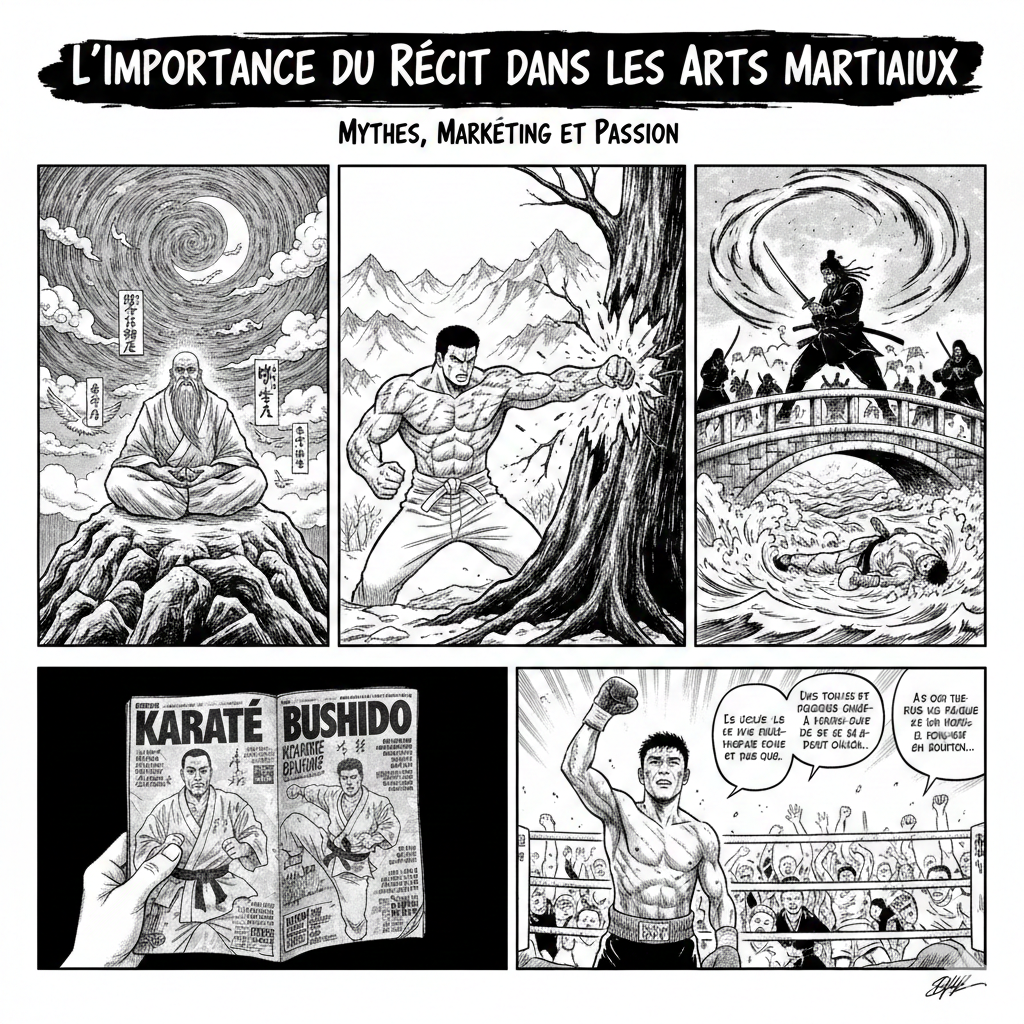
Réflexions martiales d’un Hypnofighter #512 : L’Importance du Récit dans les Arts Martiaux : Mythes, Marketing et Passion

Il semble aujourd’hui assez clair que, depuis que nous nous intéressons aux arts martiaux, les histoires ont toujours été présentes. Nous en avons déjà parlé avec des styles chinois ou japonais dans lesquels on trouvait toujours un maître un peu mythique, qui se retrouvait dans la nature pour découvrir une nouvelle technique, un nouveau système.

Nous avons cela avec le Wing Chun, par exemple, où la nonne qui a inventé le style avait des caractéristiques spécifiques. Nous l’avons avec des styles comme celui de la Grue, où l’observation de la nature a donné un système de combat. Nous l’avons bien sûr avec le Kyokushinkai et les mois et années que Maître Masutatsu Ōyama aurait passés dans la montagne.

Nous l’avons aussi avec le récit de Miyamoto Musashi et l’ensemble de ses victoires. Est-il possible qu’un système se développe sans récit ? Parce que si on y pense, le récit ne reste que du marketing, qu’une façon de mettre en avant un professeur ou un système technique, afin d’attirer ou d’intriguer les personnes.

Nous savons que les magazines comme Karaté Bushido, dans lequel beaucoup d’entre nous ont découvert des arts martiaux, étaient écrits par des journalistes passionnés qui, eux-mêmes, nous plongeaient dans des ambiances et nous « vendaient » un maître, un sifu, un sensei, un pratiquant avec toute une histoire. Même dans la section boxe, nous pouvions avoir l’historique de ces grands combattants, avec les difficultés qu’ils ont rencontrées dans la vie, les obstacles mais aussi les grands succès qui ont fait qu’ils sont devenus des champions.

Le récit est quelque chose qui, pour l’humain, est essentiel et qui, pour la curiosité, pour peut-être même éveiller des passions, est une nécessité. Il restera dès lors empreint de mythes, voire de légendes.

Prenez ce qui est bon et juste pour vous. Be One, Pank. https://www.passioncombat.net/

Martial Reflections of a Hypnofighter #512: The Importance of Narrative in Martial Arts: Myths, Marketing, and Passion

It seems quite clear today that, ever since we’ve been interested in martial arts, stories have always been present. We’ve already discussed this with Chinese or Japanese styles where we always found a somewhat mythical master who retreated into nature to discover a new technique, a new system.

We have this with Wing Chun, for example, where the nun who invented the style had specific characteristics. We have it with styles like that of the Crane, where the observation of nature gave rise to a combat system. We certainly have it with Kyokushinkai and the months and years that Master Masutatsu Ōyama is said to have spent in the mountains.

We also have it with the story of Miyamoto Musashi and all his victories. Is it possible for a system to develop without a narrative? Because if we think about it, the narrative is nothing more than marketing, a way to highlight a teacher or a technical system, to attract or intrigue people.

We know that magazines like Karaté Bushido, in which many of us discovered martial arts, were written by passionate journalists who themselves immersed us in atmospheres and « sold » us a master, a sifu, a sensei, a practitioner with a whole story. Even in the boxing section, we could get the history of these great fighters, with the difficulties they encountered in life, the obstacles but also the great successes that made them champions.

Narrative is something that is essential for humans, and for curiosity, perhaps even to awaken passions, it is a necessity. It will therefore remain imbued with myths, even legends.

Take what is good and right for you. Be One, Pank. https://www.passioncombat.net/
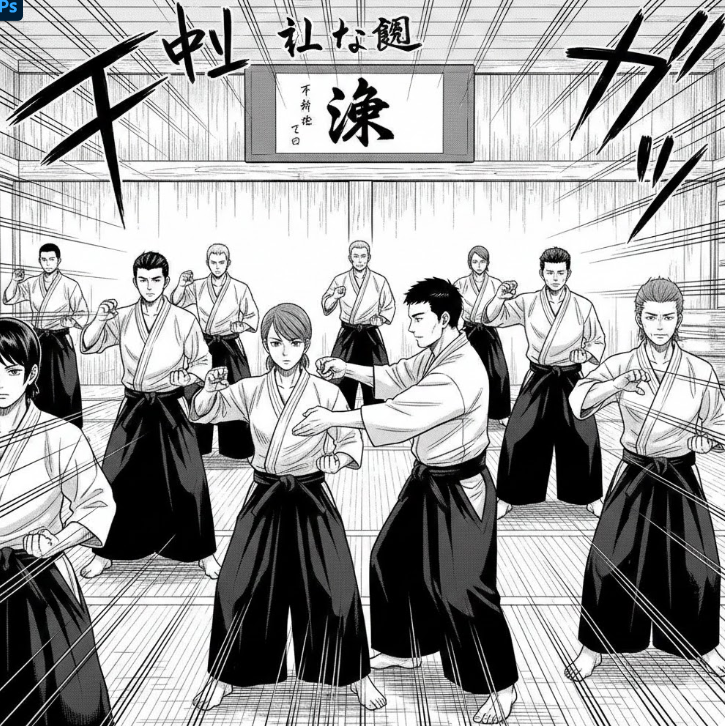
Réflexions martiales d’un Hypnofighter #509 : Rendre l’espace de pratique neutre et uniforme

Nous pourrions nous dire que nous vivons une époque où le sport est accessible à tous (surtout en France grâce aux associations) et que toutes les populations peuvent facilement se retrouver dans des clubs pour pratiquer. Pourtant, nous avons des rappels constants qui ne sont que des rappels, car avant les remous de situations comme celles impliquant ATOS ou CHECKMAT, il y avait déjà des problèmes et cela continuera certainement après.

Les femmes ne peuvent pas toujours pratiquer toutes les disciplines ou le faire dans des conditions qui peuvent parfois être nauséabondes. Entre les hommes qui pensent qu’il y a une opportunité, ceux qui les objectivent, et ceux qui, à l’inverse, les voient comme impures ou intouchables, nous nous retrouvons face à une difficulté subie qui ne devrait pas exister, mais qui est bien réelle.

Les arts martiaux, et je le répète souvent dans mes publications, sont ouverts à TOUS. Si je suis très uniforme et que nous ne nous distinguons pas, c’est aussi pour que, pendant le temps de la pratique, nous ne nous retrouvions pas dans un monde de différences (qui a ses avantages et ses inconvénients) mais dans un monde commun, avec des codes et des règles qui, pour la session, sont « universels » aux pratiquants.

La neutralité est recherchée. C’est peut-être pour cette raison que, dans le dojo, je n’apprécie pas la mise en avant de pratiquants, notamment les compétiteurs ou les personnes qui veulent sortir du lot. C’est précisément cette conformité, transitoire et volontaire, qui fait que, dans ce cadre, hommes et femmes peuvent se sentir en territoire connu et dans un effort commun.

Voir l’autre comme un pratiquant, quelles que soient ses caractéristiques, juste comme un co-apprenant, qui parfois deviendra un adversaire, un némésis, un acolyte ou simplement une personne de plus que l’on croise sur le tatami. Faire en sorte que les femmes puissent se retrouver facilement dans l’académie, autant par l’attitude des disciples que par celle des professeurs, est essentiel pour faire avancer nos disciplines.

Prenez ce qui est bon et juste pour vous. Be One, Pank. https://www.passioncombat.net/

Martial Reflections of an Hypnofighter #509: Making the Practice Space Neutral and Uniform

We might tell ourselves that we are in an era where sport is accessible to everyone (especially in France thanks to associations) and that all populations can easily find themselves in clubs to practice. And then we have reminders that are just reminders, because before the turmoil of situations like ATOS or CHECKMAT, problems already existed, and they will certainly continue afterwards.

Women cannot necessarily practice all disciplines or do so under conditions that can sometimes be nauseating. Between men who think there’s a chance, those who objectify them, and those who, conversely, see them as impure or untouchable, we find ourselves facing a endured difficulty that shouldn’t exist but is real.

Martial arts, and I often repeat it in my posts, are open to ALL. If I am very uniform and we don’t distinguish ourselves, it’s also so that during practice, we don’t find ourselves in a world of differences (which has its pros and cons) but in a common world, with codes and rules that, for the session, are « universal » to practitioners.

Neutrality is sought. Perhaps this is why, in the dojo, I don’t like the highlighting of practitioners, especially competitors or people who want to stand out. It is precisely this transient and voluntary conformity that allows both men and women to feel in familiar territory and in a common effort within this framework.

Seeing the other as a practitioner, regardless of their characteristics, just as a co-learner, who sometimes will become an opponent, a nemesis, an acolyte, or just another person one crosses on the tatami. Ensuring that women can easily find themselves in the academy, both through the attitude of the disciples and that of the instructors, is essential to advance our disciplines.

Take what is good and right for you. Be One, Pank. https://www.passioncombat.net/
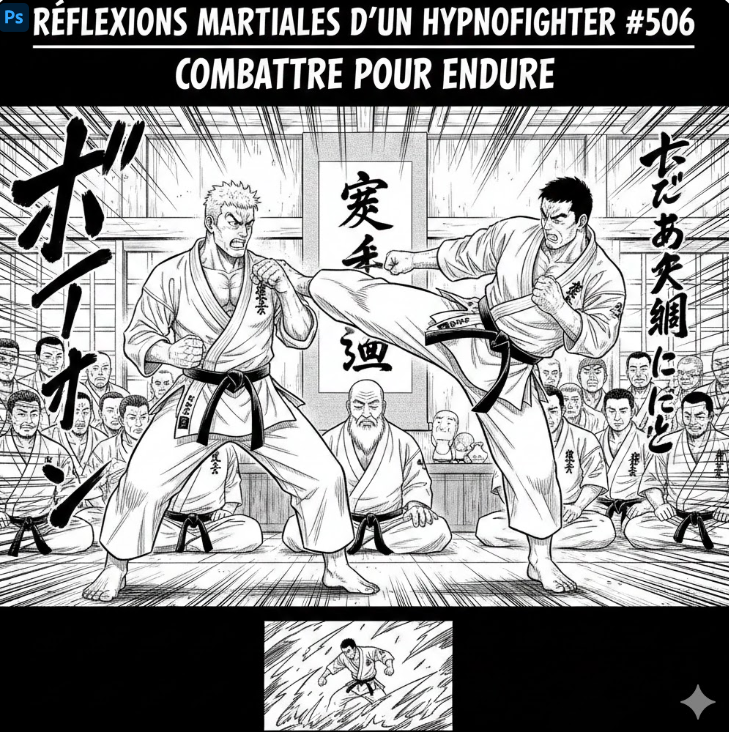
Réflexions martiales d’un Hypnofighter #506 : Combattre pour endurer

Quand Sosai Oyama a mis en place les règles de compétition du Karaté Kyokushinkai, il avait dit à Kancho Nakamura (World Seido Karate) qu’il voulait que « tout le monde » puisse participer aux compétitions. Pour cette raison, ne pas autoriser les percussions de poings au visage était important pour préserver « l’intégrité physique ».

Ce qui est intéressant dans ces confrontations que beaucoup considèrent comme « bourrines », c’est qu’à l’inverse de la boxe Thaï ou du Kick-boxing, il y a peu de déplacements et beaucoup d’encaissements. C’est là tout l’état d’esprit Kyokushin. L’idée est de permettre aux pratiquants de Karaté d’endurer et d’apprendre à encaisser, à remiser, et à tout donner.

Même si nous conservons des écoles de combat leur forme d’expression sportive, la philosophie derrière les styles, et particulièrement le Karaté plein contact, est belle : celle de pouvoir se dépasser, de ne pas fuir la douleur, car dans cette école, il est difficile de faire des combats sans en ressortir endolori.

Encaisser les coups et rester prêt à riposter, c’est comme lorsque la vie nous malmène et peut nous amener aux portes du KO, mais que nous devons quand même continuer à avancer. Le Kyokushin, ce n’est pas forcément la quête du plus fort, mais la voie vers l’endurance, et cette idée que même quand c’est dur, on peut chercher à continuer ou éviter de rester au sol.

Force aux combattants de la Coupe de France de Kyokushin qui a lieu ce week-end. Osu.

Prenez ce qui est bon et juste pour vous. Be One, Pank. https://www.passioncombat.net/

Martial Reflections of a Hypnofighter #506: Fighting to Endure

When Sosai Oyama established the competition rules for Kyokushinkai Karate, he told Kancho Nakamura (World Seido Karate) that he wanted « everyone » to be able to participate in competitions. For this reason, not allowing punches to the face was important for « physical integrity. »

What’s interesting about these confrontations, which many consider « brutal, » is that unlike Thai boxing or Kick-boxing, there’s little movement and a lot of taking hits. This is the whole Kyokushin spirit. The idea is to allow Karate practitioners to endure and learn to take punches, counter, and give their all.

Even if we retain the sporting expression of combat schools, the philosophy behind the styles, and particularly full-contact Karate, is beautiful: that of being able to surpass oneself, not to shy away from pain, because in this school, it’s difficult to fight without coming out sore.

Taking hits and remaining ready to counter, it’s like when life takes its toll and can bring us to the brink of a knockout, but we still have to keep moving forward. Kyokushin isn’t necessarily about seeking the strongest, but rather the path to endurance, and this idea that even when it’s tough, you can strive to continue or avoid staying down.

Strength to the fighters of the Kyokushin French Cup taking place this weekend. Osu.

Take what is good and right for you. Be One, Pank. https://www.passioncombat.net/
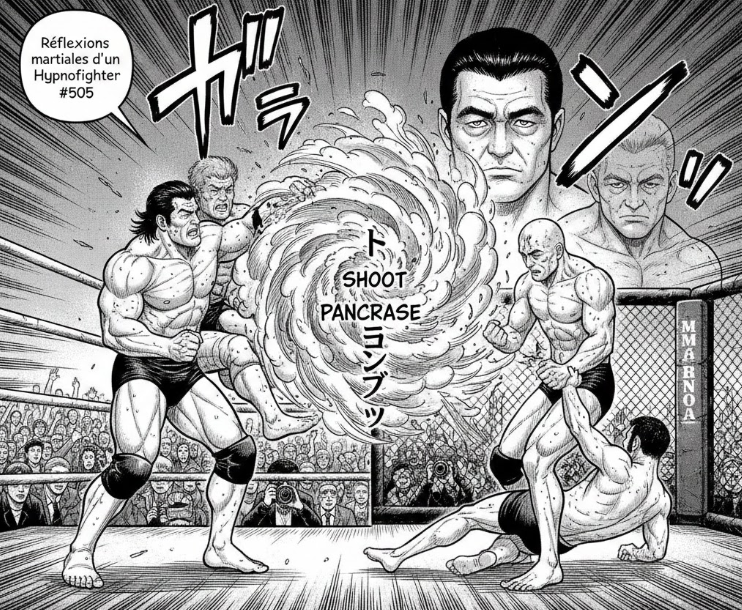
Réflexions martiales d’un Hypnofighter #505 : Du Catch Wrestling au Pro Wrestling et vers le MMA

Je trouve l’évolution du Catch Wrestling plutôt curieuse. Comme je l’ai partagé dans de précédentes chroniques, pour des raisons financières, à l’instar de la boxe à la même période et partout dans le monde, les lutteurs et « catch wrestlers », mais aussi les Judokas (Kimura) ou Karatékas (Oyama) sont passés par le Pro Wrestling (ce que nous appelons aujourd’hui catch WWE, AEW…).

Si aujourd’hui la grande majorité des catcheurs américains (WWE) sont inaptes au MMA, la situation est différente au Japon. Étrangement, le passage de figures comme Karl Gotch ou Billy Robinson a transformé ce qui n’était qu’un spectacle en une version plus « réaliste » du Pro Wrestling. Mais surtout, trois des plus grandes organisations de MMA des années 2000 au Japon sont nées de catcheurs.

Le ShootWrestling, qui est devenu ShootFighting et Shooto, a été créé par Sayama dès 1988. Il a mis en place un système de compétition de combat libre similaire à ce que nous avons connu sous les règles du Pancrace en France, puis a fondé une organisation professionnelle. En parlant de Pancrace, Funaki et Suzuki, également catcheurs, ont mis en place l’Hybrid Wrestling Pancrase que nous connaissons, avec au départ des matchs déterminés puis, par la suite, une compétition sportive classique. Enfin, Maeda a créé le RINGS, qui a permis à des combattants européens et russes de faire leurs armes.

L’esprit belliqueux du Catch Wrestling a ainsi transcendé la facette spectacle pour redonner naissance à des shows de MMA où le réalisme et l’efficacité primaient. Je pense que ces « Catch Wrestlers », Gotch et Robinson, ont trouvé un écho au Japon pour une philosophie développée à Wigan, au Royaume-Uni, et ce, malgré une culture totalement opposée à la leur.

Prenez ce qui est bon et juste pour vous. Be One, Pank. https://www.passioncombat.net/

Martial Reflections of an Hypnofighter #505: From Catch Wrestling to Pro Wrestling and Towards MMA

I find the evolution of Catch Wrestling rather peculiar. As I shared in previous columns, for financial reasons, much like boxing during the same period and all over the world, wrestlers and catch wrestlers, but also Judokas (Kimura) or Karatekas (Oyama) transitioned through Pro Wrestling (what we now call WWE, AEW catch…).

While today the vast majority of American wrestlers (WWE) are unfit for MMA, the situation is different in Japan. Strangely, the involvement of figures like Karl Gotch or Billy Robinson transformed what was merely a spectacle into a more « realistic » version of Pro Wrestling. More importantly, three of the biggest MMA organizations of the 2000s in Japan were born from wrestlers.

ShootWrestling, which became ShootFighting and Shooto, was created by Sayama as early as 1988. He established a system of free combat competition similar to what we knew as Pancrase rules in France, then founded a professional organization. Speaking of Pancrase, Funaki and Suzuki, also wrestlers, established the Hybrid Wrestling Pancrase that we know, initially with predetermined matches and later evolving into a classic sports competition. Finally, Maeda created RINGS, which allowed European and Russian fighters to gain experience.

The pugnacious spirit of Catch Wrestling thus transcended the spectacle aspect to revive MMA shows where realism and effectiveness prevailed. I believe that these Catch Wrestlers, Gotch and Robinson, found resonance in Japan for a philosophy developed in Wigan, UK, despite a culture totally opposite to their own.

Take what is good and right for you. Be One, Pank.
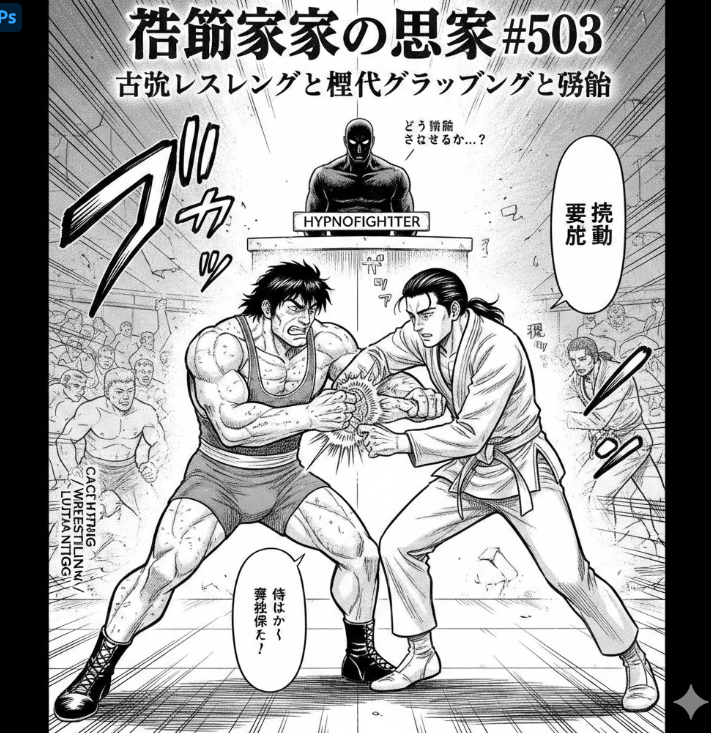
Réflexions martiales d’un Hypnofighter #503 : Intégrer le Catch Wrestling dans le Grappling Actuel

Mon intention cette saison est de retourner aux sources de la Luta Livre de Tatu. Pour ce faire, j’étudie dans un premier temps la forme de Catch Wrestling de Wigan, pour ensuite passer à celle des USA, la mère de la Luta, et enfin à celle du Japon, avec le Shooto.

Cependant, une chose est complexe : intégrer un système qui ne pense pas comme ce que nous étudions depuis 30 ans, ce grappling formalisé à travers le Jiu-Jitsu. D’ailleurs, notre façon d’enseigner les techniques, même si le « rebranding » américain est maintenant Jiu-Jitsu, en tant que professeur, donne un enseignement qui reste assez souple, avec des transitions marquées par une certaine fluidité.

En Catch Wrestling / Luta Ancienne (CWLA), tout est séquencé avec l’utilisation de la douleur comme un levier nécessaire dans l’exécution des techniques. Ce qui donne une impression de « bourrinage » et que rien ne se fait de façon fluide. De plus, à l’inverse du grappling, il y a beaucoup de décrochages. C’est un peu comme si, en Jiu-Jitsu, on s’adaptait à l’opposant, on gardait le contact pour rester dans une séquence, alors qu’en CWLA, on pense à toujours se relever.

Ce n’est pas une fuite, mais il y a une préférence à lâcher une posture qui n’apporte rien en se « dégrafant » pour récupérer soit debout, soit sur un équivalent « à genoux ». Ce sont des situations dont nous, grapplers, ne sommes pas fans, voire que nous pouvons considérer comme de l’anti-jeu.

Seulement, c’est cohérent avec cette idée d’éviter de rester dessous et, inconsciemment, de subir des takedowns. Se redresser et chercher à retrouver une posture neutre, souvent en lutte, est préférable à recomposer une garde et de « sweeper ».

Dans une démarche de vouloir intégrer au sein de la forme de Luta Livre que Flavio m’a transmise, tout en respectant des concepts plus CWLA avec ce qu’est devenu le grappling actuel, il y a beaucoup de choses qui ne semblent pour l’instant pas vraiment compatibles et qu’il va falloir que je parvienne à intégrer pour l’enseigner dans le jeu de mes élèves…

Prenez ce qui est bon et juste pour vous. Be One, Pank.

Martial Reflections of an Hypnofighter #503: Integrating Catch Wrestling into Modern Grappling

My intention this season is to return to the roots of Tatu’s Luta Livre. To do this, I am initially studying the Wigan form of Catch Wrestling, then moving on to the USA’s form, the mother of Luta, and finally Japan’s, with Shooto.

However, one thing is complex: integrating a system that doesn’t think like what we’ve been studying for 30 years, this grappling formalized through Jiu-Jitsu. Moreover, our way of teaching techniques, even if there’s been an American rebranding to Jiu-Jitsu, as a teacher, results in a fairly flexible instruction with transitions marked by a certain fluidity.

In Catch Wrestling / Old Luta (CWLA), everything is sequenced with the use of pain as a necessary lever in the execution of techniques. This gives an impression of « brutality » and that nothing is done fluidly. Furthermore, unlike grappling, there are many disengagements. It’s a bit like in Jiu-Jitsu we adapt to the opponent, we maintain contact to stay in a sequence, whereas in CWLA, the thought is always to get back up.

This isn’t an escape, but there’s a preference to abandon a posture that offers nothing by « disengaging » to recover either standing or in a « kneeling » equivalent. These are situations that we grapplers are not fond of, and we might even perceive them as anti-game.

However, it’s consistent with the idea of avoiding staying underneath and, unconsciously, suffering takedowns. Getting back up and trying to regain a neutral posture, often in wrestling, is preferable to recomposing a guard and sweeping.

In an effort to incorporate elements into the Luta Livre form that Flavio passed on to me, while also respecting more CWLA concepts within what modern grappling has become, there are many things that currently don’t seem truly compatible and that I will have to succeed in integrating to teach them in my students’ game…

Take what is good and right for you. Be One, Pank.
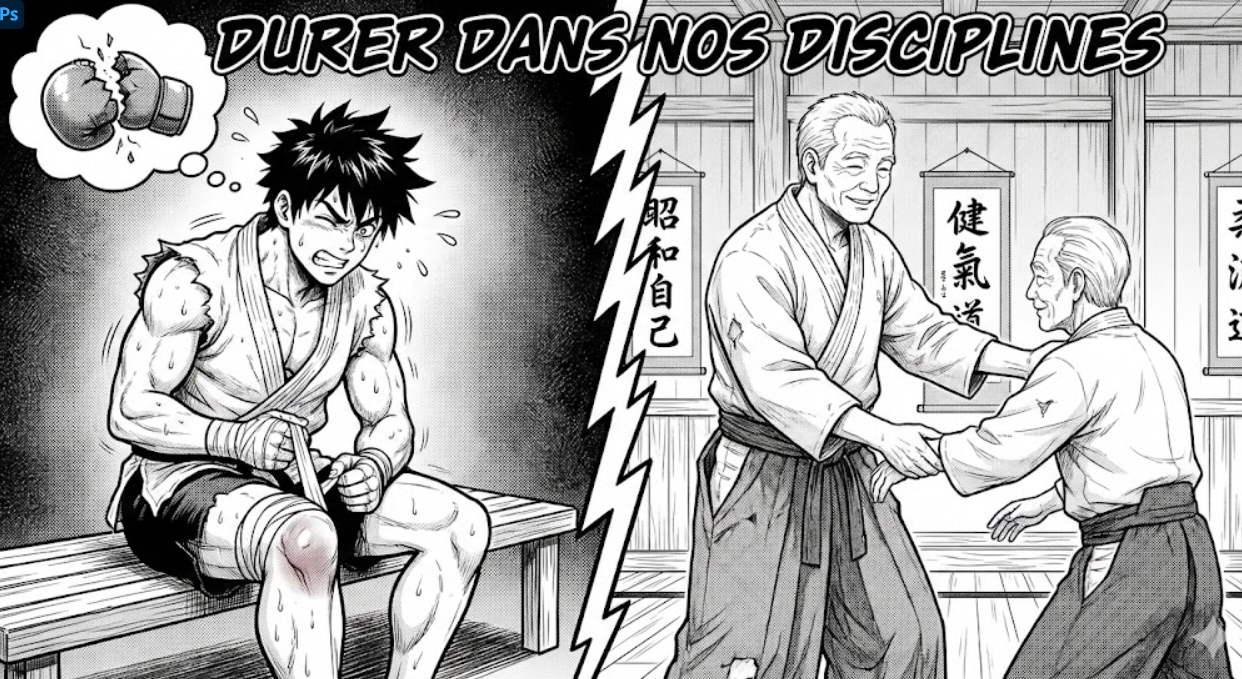
Réflexions martiales d’un Hypnofighter #499 : Durer dans nos disciplines

Il est difficile de savoir ce qu’il y a à mettre en place quand on souhaite faire des arts martiaux à long terme. Même pour ceux qui ne sont pas allés dans la facette sportive de la discipline, il y a un moment où l’on voit de nombreux pratiquants arrêter à cause de leurs douleurs et de problèmes physiques, souvent issus de l’entraînement.

Quand on voit des boxeurs qui cessent complètement les sparrings (et c’est une bonne chose pour éviter les impacts forts), on peut se demander pour les karatékas, les judokas ou autres lutteurs jusqu’à quand ils peuvent encore pratiquer des randoris et prendre plaisir à des sparrings sans se mettre en danger.

Mais si on ne combat plus, est-ce que nous allons avoir la même passion pour la discipline ? Combien de pratiquants cessent post-compétition ? Combien cessent également quand leur corps n’apporte plus les mêmes sensations et capacités ?

Est-ce que pour durer nous devrions diminuer, voire abandonner le combat ? Mais s’il y a des disciplines qui ont des formes comme des Katas ou Taos, qu’en est-il des systèmes où l’on ne travaille pas seul ? Est-ce que les arts martiaux doivent juste devenir du fitness ou un simple entretien corporel ?

Si c’est le cas, à part l’histoire que nous avons vécue dans les dojos, est-ce que nous venons pour la répétition technique, cette quête du geste juste ? Ou est-ce que nous y allons pour partager, enseigner ?

Le combat est pour la plupart d’entre nous la raison pour laquelle nous passons des heures à l’entraînement. Pourtant, ces mêmes combats sont ce qui fait que nous pourrions diminuer ou cesser notre présence dans la salle. En prenant soin de son corps et en cherchant « moins mais mieux » en termes de randoris – avec des partenaires qui font progresser plutôt que ceux qui veulent challenger – peut-être pourrions-nous alors faire comme ces anciens qui viennent encore si souvent.

Prenez ce qui est bon et juste pour vous. Be One, Pank. https://www.passioncombat.net/

Martial Reflections of an Hypnofighter #499: Lasting in our disciplines

It is difficult to know what needs to be put in place when wishing to practice martial arts long-term. Even for those who haven’t gone into the competitive sports facet of the discipline, there comes a moment where we see many practitioners stop due to their pains and physical issues, often stemming from training.

When we see boxers completely ceasing sparring (and this is a good thing to avoid strong impacts), one might wonder about karatekas, judokas, or other grapplers: until when can they still practice randoris and enjoy sparring without putting themselves in danger?

But if we no longer fight, will we have the same passion for the discipline? How many practitioners quit post-competition? How many also quit when their body no longer provides the same sensations and capabilities?

To last, should we diminish or even abandon combat? But while there are disciplines that have forms like Katas or Taos, what about systems where one does not work alone? Should martial arts just become fitness or simple bodily maintenance?

If that is the case, apart from the history we have lived in the dojos, do we come for technical repetition, this quest for the precise gesture? Or do we go there to share, to teach?

For most of us, combat is the reason we spend hours training. Yet, these very fights are what might cause us to diminish or cease our presence in the gym. By taking care of one’s body and seeking « less but better » in terms of randoris – with partners who help you progress rather than those who just want to challenge – perhaps then we could do like those old-timers who still come so often.

Take what is good and right for you. Be One, Pank.