La gestion du stress est un élément clef du monde de l’hypnose mais peut être pas comme on peut le diffuser.
Testez, observez et concluez par vous mêmes. Les potentiels sont en vous. La connaissance est Partage Ne prenez que ce qui est bon et juste pour vous Be One Pank
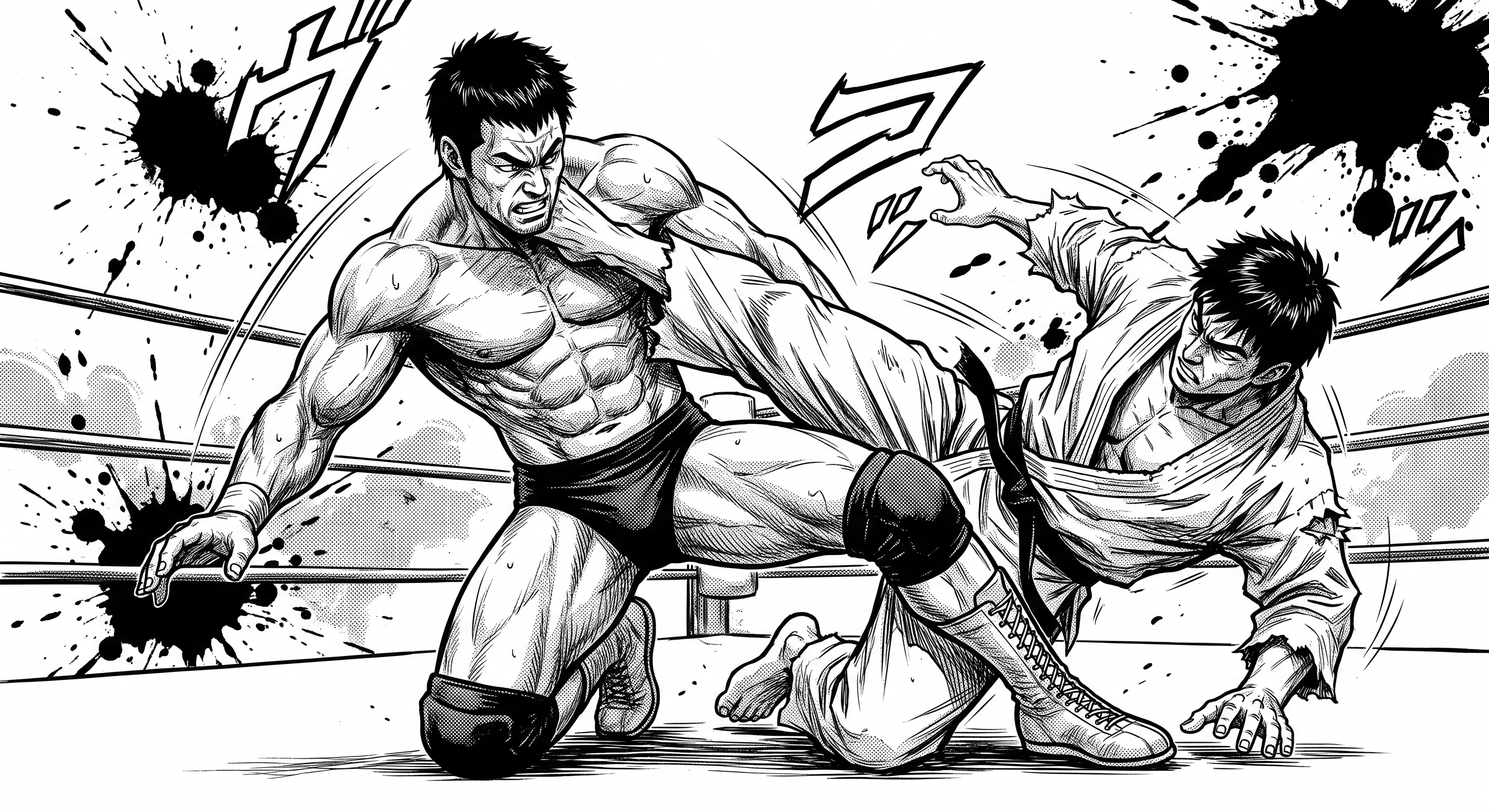
Comme je vous le partageais dans mon dernier article, il est étonnant de voir au Japon — une nation considérée comme le berceau de nombreux styles puissants de sports de combat tels que le karaté au KO, le Kudo, le judo, le kickboxing et ses variantes du catch wrestling avec le SAW et le Combat Wrestling, ou encore du MMA avec le Shooto, le Wajyutsu ou le Pancrase — que l’on n’ait pas valorisé ces combattants cherchant le KO pour représenter le pays, mais qu’on ait plutôt choisi des athlètes plus ou moins formés au combat pour le faire.
Ce n’est pas une notion propre au XXIᵉ siècle : Rikidōzan avait fait dégénérer un combat contre Kimura, et Inoki avait affronté Ali dans un style mixte. À chaque fois, il s’agissait de pro wrestlers. Pour les fans du Pride, des combattants incroyables comme Alexander Otsuka ou Kiyoshi Tamura ont été envoyés pour représenter la discipline et ont subi de nombreux revers.
Mais celui que l’on connaît le mieux reste Sakuraba, qui représentait la quintessence du pro wrestling. Pourquoi n’avoir pas plutôt considéré un karatéka, un kickboxeur, voire un judoka (nous avons eu à cette période Akira Shoji, Yoshihiro Akiyama ou le grand Hidehiko Yoshida) pour représenter les arts martiaux japonais ?
Est-ce parce que, comme nous le voyons aujourd’hui bien trop souvent, les styles dits « traditionnels » ont eu peur de faire pâle figure et de se faire battre selon des règles qui ne sont pas les leurs ? Quand on voit que des champions Kyokushin de l’IKO ne peuvent pas participer à d’autres organisations sans subir de blâme, ou que la Fédération japonaise de judo a banni Ishii, champion olympique, pour s’être lancé dans le MMA ?
Est-ce que les styles reconnus préfèrent laisser les gens du spectacle prendre la place en tant que « meilleurs » avec un regard de mépris, en se disant : « Eux, ce sont des showmen, ils sont faibles et il est normal qu’ils perdent en MMA. Si nous, nous en avions le droit… » ?
En tout cas, les pro wrestlers des années 1990-2000 ont créé de grandes écoles de MMA et des organisations qui ont permis à des champions d’éclore et à des milliers de pratiquants d’exercer des styles complets.
Martial Reflections of a Hypnofighter #637: Why Pro Wrestlers Were Considered Stronger Than Knockout-Oriented Combat Athletes
As I shared with you in my previous article, it is striking that Japan—a nation widely regarded as the cradle of numerous formidable combat styles such as full-contact Karate, Kudo, Judo, Kickboxing, along with catch wrestling derivatives like SAW and Combat Wrestling, as well as MMA precursors like Shooto, Wajyutsu, or Pancrase—did not prioritize its knockout-seeking fighters to represent the country, choosing instead more or less cross-trained athletes for this role.
This phenomenon is by no means unique to the 21st century: Rikidōzan famously engaged in a legitimate shoot-style bout against Kimura, and Antonio Inoki fought Muhammad Ali in a hybrid rules match. In each instance, pro wrestlers took center stage. For fans of the Pride Fighting Championships, exceptional competitors like Alexander Otsuka or Kiyoshi Tamura were sent to represent the discipline, only to suffer numerous setbacks.
However, the most renowned among them remains Kazushi Sakuraba, who embodied the absolute pinnacle of pro wrestling. Why was there no equivalent push to have a karateka, a kickboxer, or even a judoka (despite having figures like Akira Shoji, Yoshihiro Akiyama, or the legendary Hidehiko Yoshida during that era) represent Japanese martial arts?
Could it be that, as we observe all too frequently today, « traditional » disciplines feared losing face and being defeated under rulesets outside their own? Consider how Kyokushin IKO champions face reprimands for competing in outside promotions, or how the All Japan Judo Federation effectively ousted Olympic champion Satoshi Ishii when he transitioned to MMA.
Do established traditional styles prefer to let entertainers take the spotlight as the « top fighters » while looking down on them, rationalizing: « They are merely showmen, so it is natural they lose in MMA; if only we were allowed to compete… »?
Regardless of the motive, the pro wrestlers of the 1990s and 2000s established major MMA academies and promotions that cultivated world-class champions and enabled thousands of practitioners to train in complete, integrated fighting styles.
La gestion du stress est un élément clef du monde de l’hypnose mais peut être pas comme on peut le diffuser.
Testez, observez et concluez par vous mêmes. Les potentiels sont en vous. La connaissance est Partage Ne prenez que ce qui est bon et juste pour vous Be One Pank
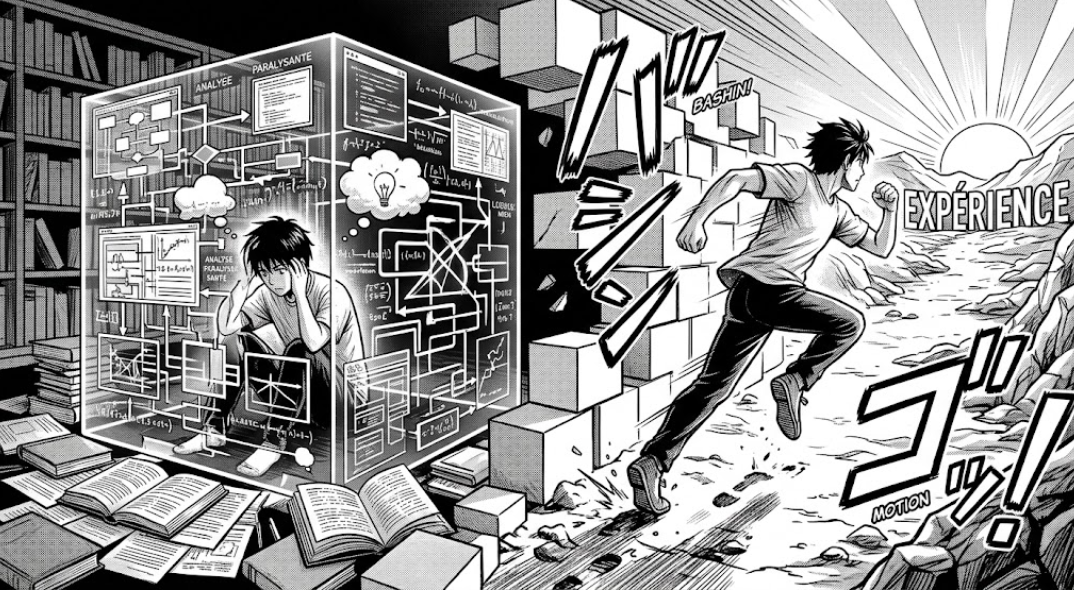
Notre société pense trop, surtout la nôtre qui est complètement « apaisée » et encore dans une certaine sérénité financière. Nous sommes capables de faire des thèses énormes sur Reddit ou sur les différents réseaux sociaux. Nous sommes dans un monde qui intellectualise tout, comme si c’était la seule façon d’agir et, en tout cas, celle qui est la plus juste.
Pourtant, on le sait, on peut cogiter autant que l’on veut, on peut faire des projections incroyables, mais à moins d’être dans un centre de recherche, si on ne met jamais en action nos logiques, nous n’allons pas avancer des masses.
Penser un peu, agir, repenser et réagir, cela nous ferait certainement beaucoup plus de bien. Cela éviterait un monde virtualisé dans nos têtes autant que dans nos téléphones. Nous sommes capables d’agir, mais nous l’avons mis de côté parce que tout semble venir en quelques clics, quelques échanges avec un bot.
Si nous ne créons plus de mouvements, si nous ne mettons plus en place des actes, nous pourrons avoir ce que j’entends tellement en consultation : regretter et avoir cette sensation d’être passé à côté de quelque chose. Et si l’on peut passer à côté de bien des choses quand on loupe ce que l’on initie, on a au moins une expérience, alors que si l’on passe à côté de tant de choses parce qu’on l’a intellectualisé, les souvenirs de ne rien faire d’autre que d’y penser risquent de piquer…
Pank’s Reflections / Instantaneous No. 642: Act and Act Again
Our society overthinks, particularly ours, which remains thoroughly comfortable and financially secure. We are capable of writing elaborate dissertations on Reddit or across various social media platforms. We live in an hyper-intellectualized world, operating under the assumption that conceptual analysis is the sole and most legitimate form of engagement.
Yet, as we well know, no matter how much we ponder or generate elaborate projections, unless one works within a formal research institution, failing to translate logic into action yields minimal real-world progress.
A cycle of moderate reflection, execution, re-evaluation, and subsequent action would be far more beneficial. This approach would mitigate the risk of living in a virtualized existence, bounded within our minds and smartphones. We possess the capacity for action, yet we have set it aside because instant gratification appears reachable within a few clicks or conversational exchanges with an AI bot.
By ceasing to initiate movement and execute concrete acts, we court a pervasive outcome frequently observed in clinical consultation: regret and the poignant sense of a missed life. While failing in an attempt still provides valuable experiential learning, forfeiting opportunities purely through over-intellectualization leaves behind a bitter memory of passive contemplation…
Je reprends des motivationals et des textes de motivation. Je cherche à voir les leviers intéressants et les liens vers le new thought ou la pensée magique.
Testez, observez et concluez par vous mêmes. Les potentiels sont en vous. La connaissance est Partage Ne prenez que ce qui est bon et juste pour vous Be One Pank
Je ne sais pas si, comme moi, vous aimez les mangas et si vous avez remarqué que, souvent dans les mangas de sports de combat ou de bagarre, les catcheurs — au sens Pro Wrestlers, comme ceux de la WWE/AEW ou de la NJPW — sont présentés comme des combattants redoutables. Ce sont des athlètes capables d’encaisser les coups (dignement, comme un pratiquant de Kyokushin sous stéroïdes) et désireux de prouver que « le catch, ce n’est pas du spectacle ».
Quand on étudie l’histoire du Catch Wrestling (dont est issu le Pro Wrestling), des Britanniques et de deux figures de proue de Wigan, Billy Robinson et Karl Gotch, on comprend qu’ils voulaient que les Pro Wrestlers maîtrisent l’essence même du combat (dans la tradition du Catch Wrestling de Wigan).
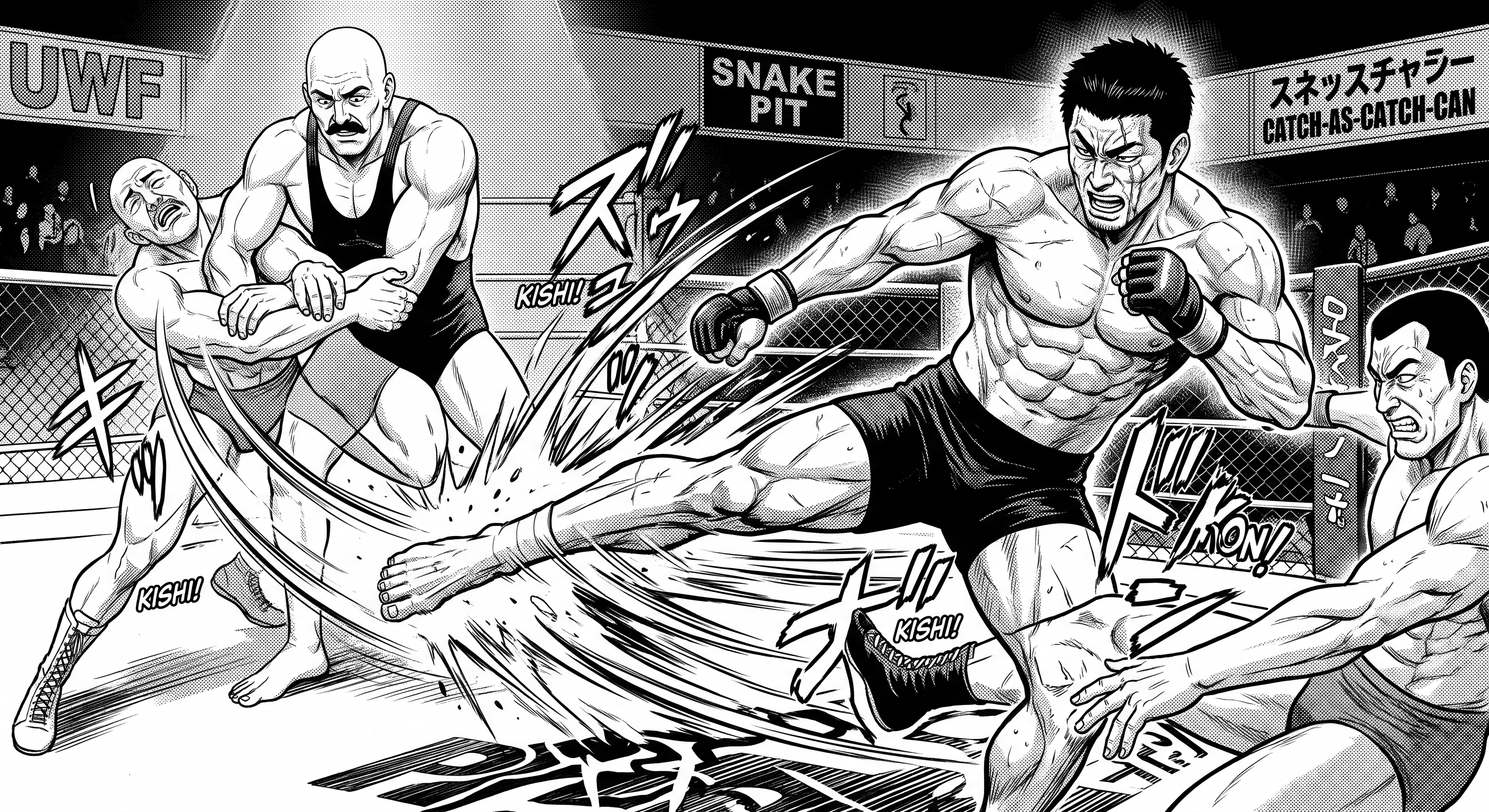
D’ailleurs, l’un des dojos actuels de Catch Wrestling les plus réputés pour cette lutte à soumission est lié au centre d’entraînement de l’UWF, le Snake Pit (en hommage au Snake Pit UK de Billy Riley). Des figures comme Sayama et Takada, mais aussi Sakuraba, ont été formées au Catch Wrestling par ces deux monstres de la discipline.
C’est pour cette raison que nous avons pu voir Nobuhiko Takada (récemment gradé ceinture noire de BJJ, félicitations à lui) affronter Rickson Gracie lors du PRIDE 1 : les Japonais considéraient ce champion de Pro Wrestling, formé par Gotch (qui le surnommait « Kick boy » en raison de son style plus axé sur les percussions que sur la lutte à soumission), comme le plus grand combattant du Japon.
Parce que le Pro Wrestling moderne est né du Catch Wrestling traditionnel et de ces combats durs, plus proches du Pancrase Hybrid Wrestling de Masakatsu Funaki (élève des Britanniques en Catch Wrestling lui aussi), la confusion s’est facilement installée dans l’esprit du public nippon. D’autant plus qu’au fil des années, les Japonais ont développé un style connu sous le nom de Shoot, où les frappes étaient réellement portées pour accentuer le réalisme (après l’émergence du MMA). Cela a ouvert la voie à la naissance d’un style évoluant du Pro Wrestling vers le MMA : le Shooto.
Martial Reflections of an Hypnofighter #636: The Legacy of Catch Wrestling and Japanese Pro Wrestling: From Entertainment to the Genesis of MMA
I don’t know if, like me, you enjoy manga and have noticed that combat sports or fighting manga frequently depict pro wrestlers—in the WWE/AEW or NJPW sense—as formidable combatants. They are portrayed as athletes who can absorb massive damage (dignified, like a Kyokushin practitioner on steroids) and who are eager to prove that « pro wrestling isn’t just entertainment. »
When examining the history of Catch Wrestling (from which Pro Wrestling evolved), the British influence, and two flagship figures from Wigan—Billy Robinson and Karl Gotch—it becomes clear that they insisted pro wrestlers understand the true essence of combat (within the Wigan Catch Wrestling tradition).
Furthermore, one of the most prominent modern Catch Wrestling dojos known for this submission grappling style is tied to the UWF training center, the Snake Pit (paying homage to Billy Riley’s Snake Pit UK). Figures like Sayama, Takada, and Sakuraba were trained in Catch Wrestling by these two legends of the discipline.
This historical continuity explains why Nobuhiko Takada (who recently received his BJJ black belt, congratulations to him) fought Rickson Gracie at PRIDE 1. The Japanese public regarded this Pro Wrestling champion—trained by Gotch (who nicknamed him « Kick Boy » due to his striking preference over submission wrestling)—as Japan’s greatest fighter.
Because modern Pro Wrestling originated from realistic Catch Wrestling and brutal contests, closely resembling Masakatsu Funaki’s Pancrase Hybrid Wrestling (who was also a Catch Wrestling student under British trainers), the distinction was easily blurred in the minds of the Japanese audience. Furthermore, over the years, Japanese promotions developed a style known as « Shoot, » where strikes were delivered with full contact to enhance realism (following the emergence of MMA). This progression bridged the gap from pro wrestling to legitimate MMA, leading to the creation of Shooto.
Je reprends des motivationals et des textes de motivation. Je cherche à voir les leviers intéressants et les liens vers le new thought ou la pensée magique.
Testez, observez et concluez par vous mêmes. Les potentiels sont en vous. La connaissance est Partage Ne prenez que ce qui est bon et juste pour vous Be One Pank
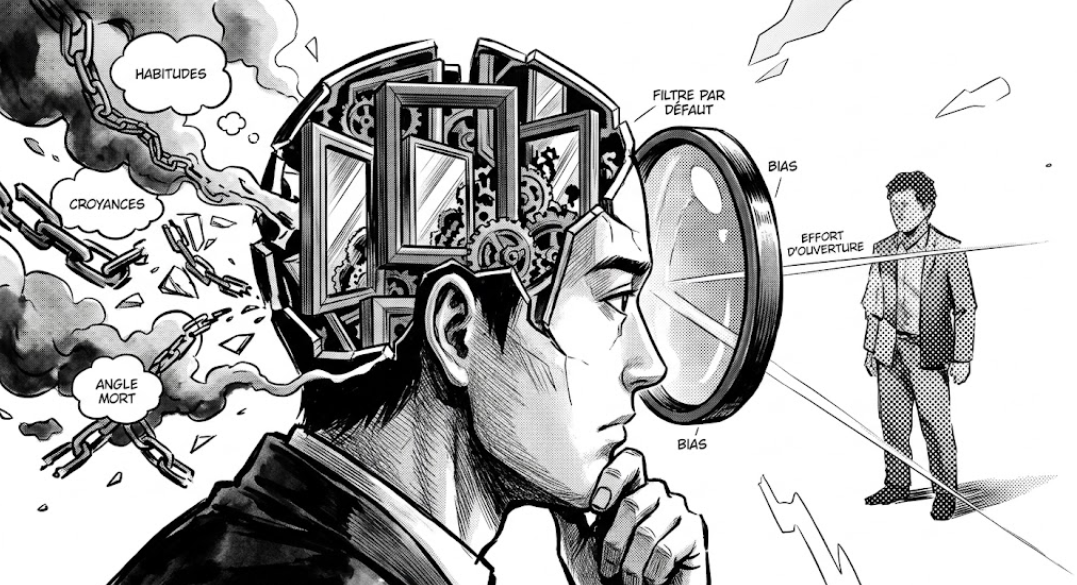
Il est difficile de sortir de nos modèles de pensée, même pendant un court moment. On se rend facilement compte que nous retournons à nos habitudes, nos biais, nos croyances et à une multitude d’angles morts.
Pourtant, si nous voulons un peu mieux comprendre les personnes qui nous entourent, sans même parler du monde, nous devons nous imposer une ouverture, même temporaire, aux processus de réflexion comme aux comportements des autres. Se mettre à la place des autres, c’est surtout ne pas penser comme nous pensons.
Parce qu’il est facile de se mettre à la place d’autrui en gardant nos propres paradigmes de pensée, la difficulté est de comprendre que les bases de réflexion et d’expérience ne sont pas les mêmes et que, même si c’était le cas, les conclusions peuvent être très différentes les unes des autres.
Même la notion d’empathie est à prendre avec des pincettes, parce que nous filtrons avec ce que nous sommes, ce que nous ressentons et ce que nous percevons de l’autre en nous.
Penser contre nous-mêmes, nous interdire d’utiliser un mode par défaut, est-ce réellement possible ? Et si ça ne l’est pas, est-ce que l’effort est suffisant pour au moins se dire : « Ok, je ne peux pas comprendre, c’est trop loin de mes repères » ?
Pank’s Reflections / Snapshot No. 641: Our Capacity Not to Think Like Ourselves
It is challenging to break away from our cognitive models, even for a brief moment. It becomes readily apparent that we habitually revert to our routines, biases, beliefs, and a multitude of cognitive blind spots.
However, if we wish to gain a deeper understanding of those around us—let alone the world at large—we must deliberately enforce an openness, even if temporary, to the thought processes and behavioral patterns of others. Placing oneself in another person’s shoes primarily means abstaining from thinking as we customarily do.
Because it is relatively effortless to project ourselves into another’s position while retaining our own cognitive paradigms, the true difficulty lies in recognizing that fundamental experiences and epistemological frameworks differ. Even when these foundations align, the resulting inferences and conclusions can diverge significantly.
Even the concept of empathy must be approached with caution, as we inevitably filter external reality through our intrinsic identity, emotional states, and internal projections of the other.
Is it truly feasible to think against ourselves and suppress our default cognitive processing? If not, is the conscious effort at least sufficient to acknowledge: « Okay, I cannot fully comprehend this; it lies beyond my reference frame »?
Je reprends des motivationals et des textes de motivation. Je cherche à voir les leviers intéressants et les liens vers le new thought ou la pensée magique.
Testez, observez et concluez par vous mêmes. Les potentiels sont en vous. La connaissance est Partage Ne prenez que ce qui est bon et juste pour vous Be One Pank
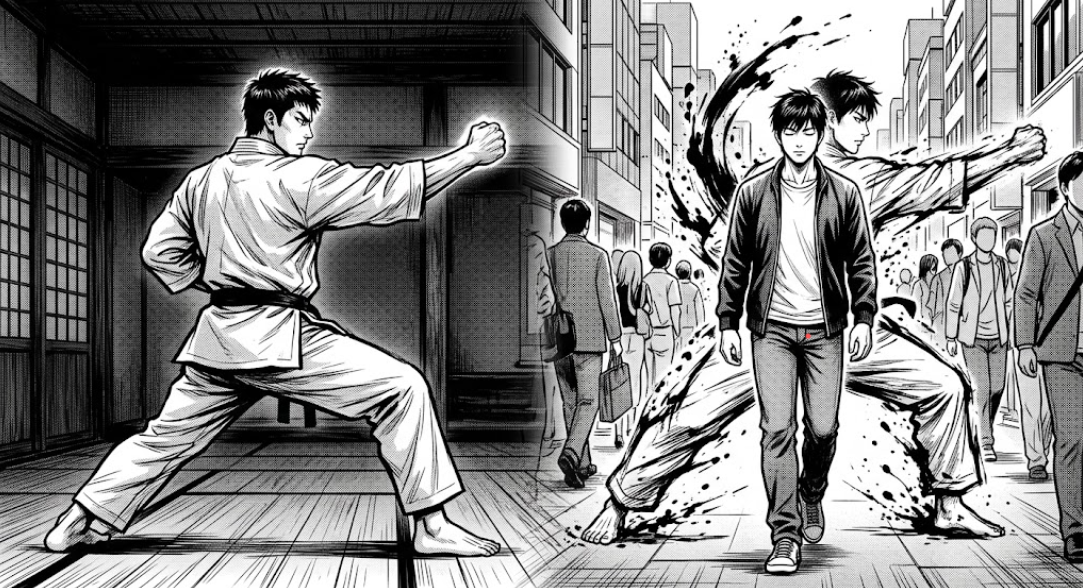
Dans la même journée, je tombe sur deux articles qui, d’une certaine façon, peuvent faire écho l’un à l’autre : un de Naka Sensei (de la JKA) dans Karate Bushido, et un autre de Chris Haueter, l’un des premiers pratiquants de BJJ aux États-Unis. Tous deux concernent « l’impact des arts martiaux » en dehors du dojo.
Naka Sensei explique que le Shugyo est une démarche de perfectionnement qui ne se limite pas au dojo : chaque situation devient une occasion d’améliorer sa technique et sa capacité d’être un homme meilleur. Cette quête visant à utiliser son karaté partout pour devenir une meilleure personne est très prisée, notamment au sein de la JKA.
Mestre Haueter, quant à lui, mettait en avant le fait qu’en tant que professeur, il ne faut pas imposer dans la vie de ses élèves les comportements attendus au dojo. Certes, l’approche est un peu différente, mais je trouve qu’elle met en lumière cette tension entre le dojo — un lieu où tout le monde se plie aux règles ou s’en va — et la liberté dans l’utilisation de la « philosophie » de l’art martial. Cela s’oppose à la vision où le karaté devient une matrice intégrale de la vie, et non simplement une activité sportive, un break, mais un engagement total.
Cependant, les deux idées gardent en ligne de mire un objectif commun : permettre à chacun de devenir l’homme ou la femme la plus « juste » dans sa vie, en se nourrissant des budos qu’il ou elle étudie.
Martial Reflections of a Hypnofighter #635: Shugyo or the Way Beyond the Dojo: Between Total Commitment and Individual Autonomy
On the same day, I came across two articles that, in a way, resonate with one another: one by Naka Sensei (from the JKA) in Karate Bushido, and another by Chris Haueter, one of the pioneer BJJ practitioners in the USA. Both address the « impact of martial arts » outside the dojo.
Naka Sensei explains that Shugyo is a process of self-refinement that is not confined to the dojo: every situation becomes an opportunity to improve one’s technique and one’s capacity to become a better person. This pursuit of applying karate everywhere to become a better human being is highly valued, particularly within the JKA.
Mestre Haueter, on the other hand, emphasized that instructors should not push their students to adopt dojo-specific behaviors in their personal lives. Although the perspective differs slightly, I find it highlights the nuance between the dojo — a space where everyone adheres to the rules or leaves — and the freedom to apply the martial art’s « philosophy », as opposed to a framework where karate becomes a governing blueprint for life rather than merely a sport, a break, or a total commitment.
Nevertheless, both perspectives share a common core objective: allowing each individual to become the most « upright » version of themselves in daily life, nourished by the budo they practice.