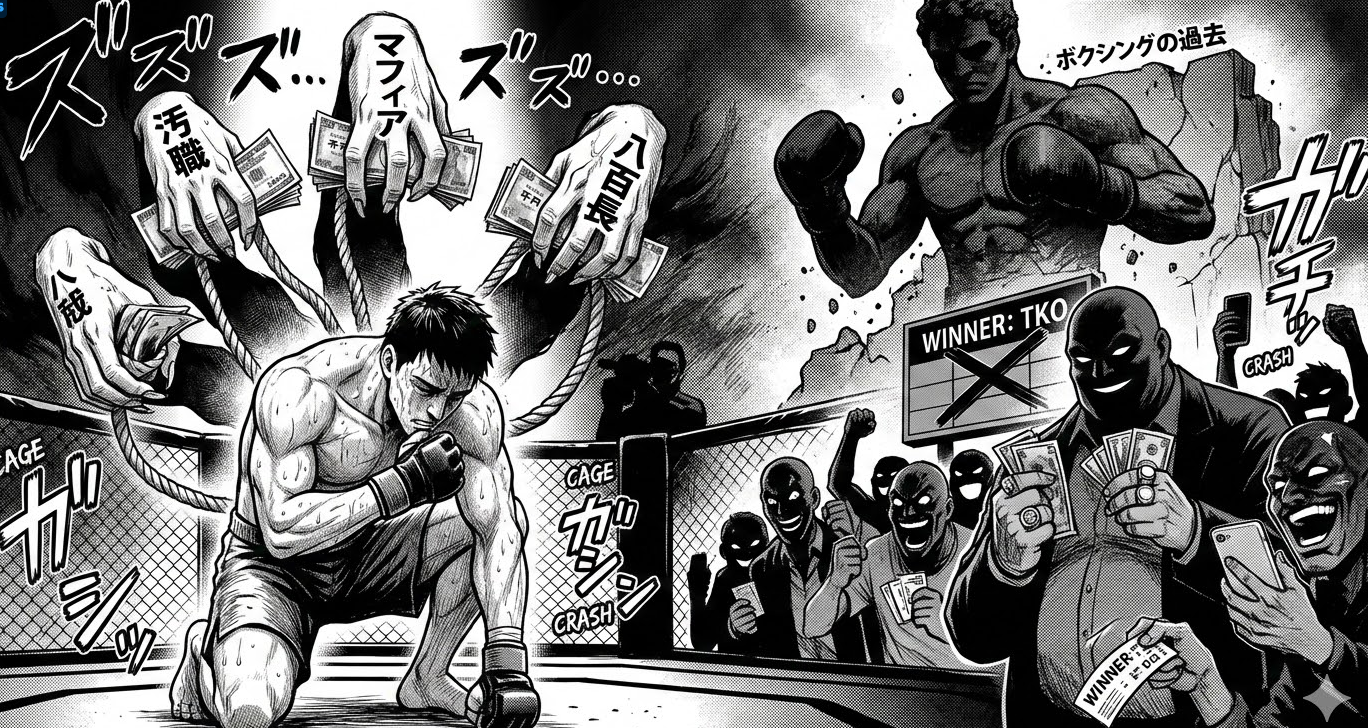
Réflexions Martiales d’un Hypnofighter #527 : Le MMA : Un avenir gangréné comme la boxe ?

Le MMA va-t-il devenir comme la boxe ? C’est une vraie question à laquelle il est aujourd’hui difficile de répondre, sachant que nous sommes encore dans une phase montante du MMA, ou peut-être au début d’un plateau. De plus, les conditions entre la boxe professionnelle et le combat libre professionnel sont un peu différentes.

Néanmoins, comme on a pu le voir dans un poste précédent, le MMA et les sports de combat de façon générale sont souvent associés à la pègre. C’est au travers de combats truqués ou simplement de paris que ces derniers arrivent à développer leur business, aussi bien dans l’ombre que dans la lumière.

On sait que la boxe anglaise a été gangrénée pendant des années par des résultats particuliers, issus d’arbitres qui ont pu être achetés, de combats truqués, ou de juges très fortement influencés pour donner une décision précise à un moment donné. Quant au MMA, en mettant de côté l’UFC pour l’instant, un nombre important de combats récents vont être revus par le FBI car suspectés d’être truqués.

Nous savons bien que ce qui prime, c’est de faire du business. Par conséquent, que ce soit pour les personnes dans la lumière du groupe TKO, ou pour celles restées dans l’ombre, l’idée est de pouvoir maintenir, voire développer, cette poule aux œufs d’or qu’est le MMA. Or, si les choses se sont gangrénées de la même façon dans une autre discipline, il n’y a aucune raison que cela n’arrive pas dans le monde du MMA.

De plus, bien que nous n’ayons pas encore assez de recul pour savoir ce qui va se passer, on se rend compte que le nouveau deal de l’UFC avec Paramount n’offre pas des cartes particulièrement intéressantes. Comme il y a un contrat de plusieurs milliards de dollars derrière, sur 5 ou 7 ans, il est possible que le public lui-même ne soit plus vraiment « hype » par ce milieu-là.

Et comme en boxe anglaise, ils n’attendront que les cartes spectaculaires qui auront lieu peut-être tous les trois mois. Petit à petit, nous allons nous retrouver avec un sport de combat qui plaît, qui fascine même à certains moments, mais qui, la plupart du temps, ne va pas forcément drainer beaucoup d’attention, même de la part de ceux qui l’aiment mais qui préfèrent voir un gros show, et qui ne s’intéressent que peu ou prou à la facette sportive.

Prenez ce qui est bon et juste pour vous. Be One, Pank.https://www.passioncombat.net/

— 

Martial Reflections of an Hypnofighter #527: MMA: A Future Corrupted Like Boxing?

Will MMA become like boxing? It’s a real question that is difficult to answer today, knowing that we are still in a rising phase of MMA, or perhaps at the beginning of a plateau. Furthermore, the conditions between professional boxing and professional mixed martial arts are somewhat different.

However, as we may have seen in a previous post, MMA and combat sports in general are often associated with organized crime. It is through fixed fights or simply betting that they manage to develop their business, both in the shadows and in the spotlight.

It is well known that English boxing was corrupted for years by peculiar results from referees who may have been paid off, fixed fights, or judges who were heavily influenced to give a precise decision at a specific time. As for MMA, setting aside the UFC for a moment, a significant number of recent fights are going to be reviewed by the FBI as potentially fixed.

We well know that the priority is doing business. Consequently, whether for those in the spotlight of the TKO group or those remaining in the shadows, the idea is to maintain, or even develop, this cash cow that is MMA. Yet, if things became corrupted in the same way in another discipline, there is no reason why it shouldn’t happen in the world of MMA.

Moreover, although we do not yet have enough perspective to know what will happen, it is apparent that the UFC’s new deal with Paramount does not offer particularly interesting cards. Since there is a multi-billion dollar contract behind it, over 5 or 7 years, it is possible that the public itself will no longer be truly hyped by this environment.

And just like in English boxing, they will only wait for the spectacular cards that will take place perhaps every three months. Gradually, we will find ourselves with a combat sport that pleases, even fascinates at certain moments, but which, most of the time, will not necessarily draw much attention, even from those who love it but prefer to see a big show, and who are only marginally interested in the sporting aspect.

Prenez ce qui est bon et juste pour vous. Be One, Pank.https://www.passioncombat.net/
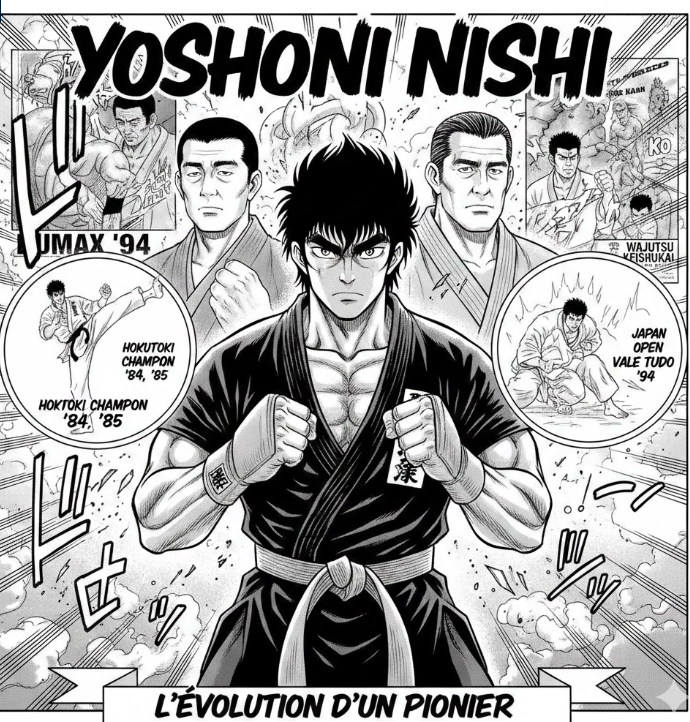
Réflexions Martiales d’un Hypnofighter #518 : Yoshinori Nishi

Vous ne vous souvenez probablement pas de ce combattant, d’autant plus si vous n’êtes pas un passionné de combat libre. En me penchant un peu sur le Daido Juku, ce karaté de Shihan Azuma qui est devenu le Kudo, je suis revenu sur les premiers pratiquants et champions. Nishi était l’un des grands de ce style, remportant en 1984 et 1985 le championnat Hokutoki.

Je reviendrai sur des éléments importants du Daido Juku, issu du Kyokushin, dans d’autres articles. Nishi a été formé au Judo par Kimura (la légende du Judo), puis rapidement au Kyokushinkai et surtout au Daido Juku vers 1983. Ce qui m’intéresse chez ce combattant, c’est qu’il a tenté de combattre dans des disciplines diverses. Il a notamment remporté le LUMAX, qui était déjà une sorte de MMA en tournoi, un peu comme l’UFC, en 1994. Quelques années auparavant, il avait combattu Rob Kaman (1990) en Kickboxing, où il subira un KO.

Il a été connu pour avoir affronté Rickson Gracie au premier Japan Open Vale Tudo de 1994. Il a rapidement perdu le match sans avoir pu s’exprimer. Ce qui est intéressant, c’est que la même année, nous avions un autre combattant du Daido Juku, d’ailleurs le premier Japonais à l’UFC, qui a perdu contre Royce Gracie : Minoki Ichihara.

Si Azuma a cherché en réponse à intégrer plus de sol et même à faire évoluer son Daido Juku, Nishi est parti dans une quête au travers de sa très célèbre école Wajutsu Keishukai. Il y a quelques années, j’avais lu qu’il avait été « coupé sous le pied » par les Gracie, parce qu’il s’était mis en tête de redévelopper le Jiujitsu au Japon. La réalité est plus simple : élève de Kimura, il a profité de sa rencontre avec un Gracie pour aller au Brésil faire une « recherche » sur la forme de Jiujitsu d’Helio Gracie, et savoir si la forme qu’ils avaient apprise était celle de la forme « originelle » du jiujitsu.

Chose que nous savons n’être pas le cas, car les Gracie ont été formés par Donato Pires, de la lignée Maeda, qui pratiquait un Kodokan Jiujitsu (les prémices du Judo). Nishi a orienté sa forme de combat vers le MMA, mettant de côté son Karategi et formant des combattants réputés dans les années 2000.

Il a vécu une période cruciale des arts martiaux modernes et, comme Azuma ou Sayama avec le Shooto, il y a eu une décision de se tourner vers l’efficacité et la mise à jour du combat plutôt que de rester dans la « tradition ».

Prenez ce qui est bon et juste pour vous. Be One, Pank.  https://www.passioncombat.net/

Martial Reflections of a Hypnofighter #518: Yoshinori Nishi

You probably don’t remember this fighter, especially if you’re not a free combat enthusiast. Going back a bit into Daido Juku, Shihan Azuma’s Karate which became Kudo, I revisited the early practitioners and champions. Nishi was one of the greats of this style, winning the Hokutoki championship in 1984 and 1985.

I will come back to important elements of Daido Juku, stemming from Kyokushin, in other articles. Nishi was trained in Judo by Kimura (the Judo legend), then quickly in Kyokushinkai and especially Daido Juku around 1983. What interests me about this fighter is that he tried to compete in various disciplines. He notably won the LUMAX, which was already a kind of MMA tournament, a bit like the UFC, in 1994. A few years before, he had fought Rob Kaman (1990) in Kickboxing, where he suffered a KO.

He was known for facing Rickson Gracie at the first Japan Open Vale Tudo in 1994. He quickly lost the match without being able to express himself. What’s interesting is that the same year, we had another Daido Juku fighter, actually the first Japanese in the UFC, who lost against Royce Gracie: Minoki Ichihara.

While Azuma sought to integrate more ground fighting and even evolve his Daido Juku in response, Nishi embarked on a quest through his very famous Wajutsu Keishukai school. A few years ago, I had read that he had been « undermined » by the Gracies because he had set out to redevelop Jiujitsu in Japan. The reality is simpler: a student of Kimura, he took advantage of his meeting with a Gracie to go to Brazil to do « research » on Helio Gracie’s form of Jiujitsu, and to know if the form they had learned was the « original » form of jiujitsu.

Something we know is not the case, as the Gracies were trained by Donato Pires, from the Maeda lineage, who practiced Kodokan Jiujitsu (the beginnings of Judo). Nishi oriented his fighting style towards MMA, setting aside his Karategi and training renowned fighters in the 2000s.

He lived through a crucial period of modern martial arts and, like Azuma or Sayama with Shooto, there was a decision to turn towards efficiency and updating combat rather than staying in « tradition ».

Take what is good and right for you. Be One, Pank.  https://www.passioncombat.net/

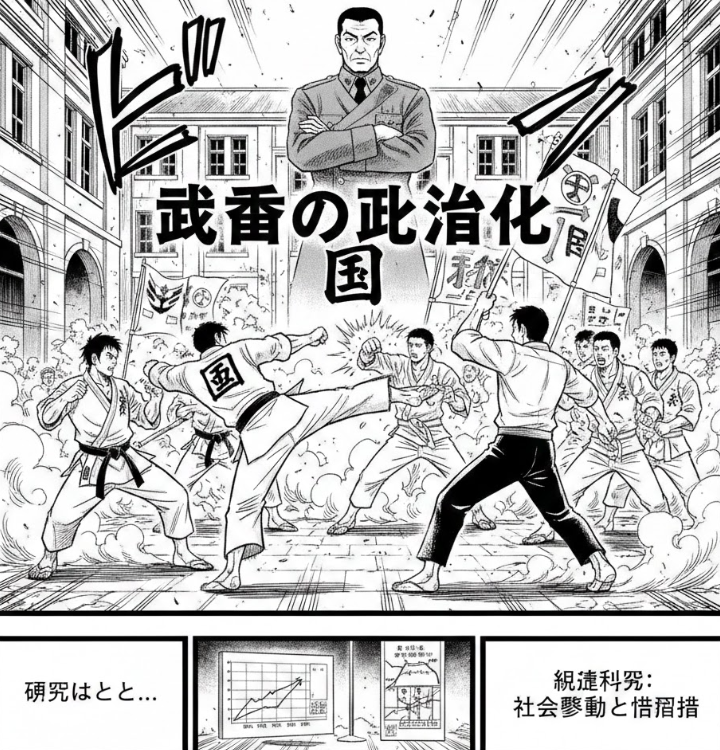
Réflexions martiales d’un Hypnofighter #513 : Les arts martiaux politisés

Les rixes et combats violents, voire mortels, font partie de l’histoire des arts martiaux. Nous pouvons facilement oublier que les boxes ou les luttes, sans même parler des armes, ont pour objectifs le combat, la domination physique et psychologique sur les opposants.

Quand on lit ce qui se passe régulièrement, avec des conséquences comme la mort de groupes politiques des deux côtés de l’échiquier, c’est malheureusement ce à quoi le combat peut mener.

Et les arts martiaux sont souvent associés à des idées nationalistes. On l’oublie parfois avec la mondialisation des systèmes et des cultures, mais pour reprendre le Japon pour exemple, le Shorinji Kempo de So Doshin a réussi sa diffusion initiale avec deux éléments clefs. Aider les jeunes hommes de la nation nippone (qui était, pour rappel, membre de l’Axe) à être plus solides et pouvoir aider la nation et également, dans un deuxième temps, à partir des années 50-60, s’inscrire dans le monde scolaire et universitaire.

Les membres du Shorinji étudiants se trouvaient dans toutes les universités et étaient au service de mouvements nationalistes. Pendant les années 68, ils utilisaient leurs connaissances pour cogner les franges plus à gauche des étudiants (cf. la guerre avec le Kyokushin dont je vous parlais).

Si un dojo cherche une neutralité, avec un uniforme et une conformité, il est aussi important de connaître l’intention des fondateurs (qui peuvent évoluer) et aussi prendre conscience que ce qui est enseigné pourra être utilisé avec des intentions idéologiques et politiques pour agresser ceux qui ne pensent pas pareil ou pour obtenir des biens divers.

Les sports de combat ne sont pas une discipline neutre et entraînent dans le quotidien des conséquences possibles. Oui, il n’y a pas besoin d’arts martiaux pour se battre, mais beaucoup de groupes politisés se forment désormais en MMA, en plus du matériel qu’ils vont avoir lors de « meetings ».

Prenez ce qui est bon et juste pour vous. Be One, Pank. https://www.passioncombat.net/

Martial Reflections of a Hypnofighter #513: Politicized Martial Arts

Brawls and violent, even deadly, fights are part of the history of martial arts. We can easily forget that boxing or wrestling, not to mention weapons, have the objectives of combat, physical and psychological domination over opponents.

When we read what regularly happens, with consequences such as the death of political groups on both sides of the spectrum, this is unfortunately what combat can lead to.

And martial arts are often associated with nationalist ideas. We sometimes forget this with the globalization of systems and cultures, but to take Japan as an example, So Doshin’s Shorinji Kempo achieved its initial spread with two key elements. Helping young Japanese men (who, let’s remember, were members of the Axis) to be stronger and able to help the nation and also, in a second phase from the 1950s-60s, integrating into the school and university world.

Student members of Shorinji were found in all universities and served nationalist movements. During the 1968 years, they used their knowledge to beat up the more left-leaning fringes of students (cf. the war with Kyokushin I mentioned).

If a dojo seeks neutrality, with a uniform and conformity, it is also important to know the founders’ intentions (which can evolve) and also to realize that what is taught can be used with ideological and political intentions to attack those who do not think similarly or to obtain various goods.

Combat sports are not a neutral discipline and lead to possible daily consequences. Yes, there is no need for martial arts to fight, but many politicized groups are now forming in MMA, in addition to the equipment they will have during « meetings. »

Take what is good and right for you. Be One, Pank. https://www.passioncombat.net/

Réflexions martiales d’un Hypnofighter #505 : Du Catch Wrestling au Pro Wrestling et vers le MMA

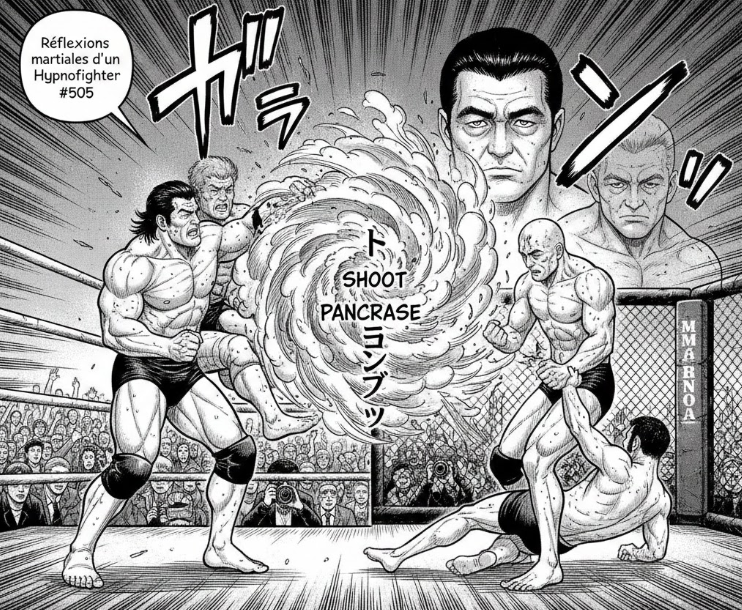
Je trouve l’évolution du Catch Wrestling plutôt curieuse. Comme je l’ai partagé dans de précédentes chroniques, pour des raisons financières, à l’instar de la boxe à la même période et partout dans le monde, les lutteurs et « catch wrestlers », mais aussi les Judokas (Kimura) ou Karatékas (Oyama) sont passés par le Pro Wrestling (ce que nous appelons aujourd’hui catch WWE, AEW…).

Si aujourd’hui la grande majorité des catcheurs américains (WWE) sont inaptes au MMA, la situation est différente au Japon. Étrangement, le passage de figures comme Karl Gotch ou Billy Robinson a transformé ce qui n’était qu’un spectacle en une version plus « réaliste » du Pro Wrestling. Mais surtout, trois des plus grandes organisations de MMA des années 2000 au Japon sont nées de catcheurs.

Le ShootWrestling, qui est devenu ShootFighting et Shooto, a été créé par Sayama dès 1988. Il a mis en place un système de compétition de combat libre similaire à ce que nous avons connu sous les règles du Pancrace en France, puis a fondé une organisation professionnelle. En parlant de Pancrace, Funaki et Suzuki, également catcheurs, ont mis en place l’Hybrid Wrestling Pancrase que nous connaissons, avec au départ des matchs déterminés puis, par la suite, une compétition sportive classique. Enfin, Maeda a créé le RINGS, qui a permis à des combattants européens et russes de faire leurs armes.

L’esprit belliqueux du Catch Wrestling a ainsi transcendé la facette spectacle pour redonner naissance à des shows de MMA où le réalisme et l’efficacité primaient. Je pense que ces « Catch Wrestlers », Gotch et Robinson, ont trouvé un écho au Japon pour une philosophie développée à Wigan, au Royaume-Uni, et ce, malgré une culture totalement opposée à la leur.

Prenez ce qui est bon et juste pour vous. Be One, Pank. https://www.passioncombat.net/

Martial Reflections of an Hypnofighter #505: From Catch Wrestling to Pro Wrestling and Towards MMA

I find the evolution of Catch Wrestling rather peculiar. As I shared in previous columns, for financial reasons, much like boxing during the same period and all over the world, wrestlers and catch wrestlers, but also Judokas (Kimura) or Karatekas (Oyama) transitioned through Pro Wrestling (what we now call WWE, AEW catch…).

While today the vast majority of American wrestlers (WWE) are unfit for MMA, the situation is different in Japan. Strangely, the involvement of figures like Karl Gotch or Billy Robinson transformed what was merely a spectacle into a more « realistic » version of Pro Wrestling. More importantly, three of the biggest MMA organizations of the 2000s in Japan were born from wrestlers.

ShootWrestling, which became ShootFighting and Shooto, was created by Sayama as early as 1988. He established a system of free combat competition similar to what we knew as Pancrase rules in France, then founded a professional organization. Speaking of Pancrase, Funaki and Suzuki, also wrestlers, established the Hybrid Wrestling Pancrase that we know, initially with predetermined matches and later evolving into a classic sports competition. Finally, Maeda created RINGS, which allowed European and Russian fighters to gain experience.

The pugnacious spirit of Catch Wrestling thus transcended the spectacle aspect to revive MMA shows where realism and effectiveness prevailed. I believe that these Catch Wrestlers, Gotch and Robinson, found resonance in Japan for a philosophy developed in Wigan, UK, despite a culture totally opposite to their own.

Take what is good and right for you. Be One, Pank.

Réflexions martiales d’un Hypnofighter #502 : Le Pride FC avait tout compris

Est-ce parce qu’ils sont dans un pays où le Pro Wrestling, c’est-à-dire l’art des combats de divertissement, est monnaie courante ? Pour rappel, si nous avons mis en place des combats truqués ou simplement spectaculaires, c’est parce que les acheteurs de spectacles recherchent avant tout un bon moment. Ils n’attendent pas nécessairement une qualité pugilistique, technique ou tactique, mais plutôt une expérience émotionnelle agréable.

Quand on observe comment des stars sont « montées » en puissance, à l’instar de Paddy (qui reste très fort) ou d’un O’Malley (également un excellent striker), on comprend que ce qui est choisi par les « match makers » est ce qui pourrait attirer des spectateurs et générer des séquences marquantes à diffuser sur les médias sociaux.

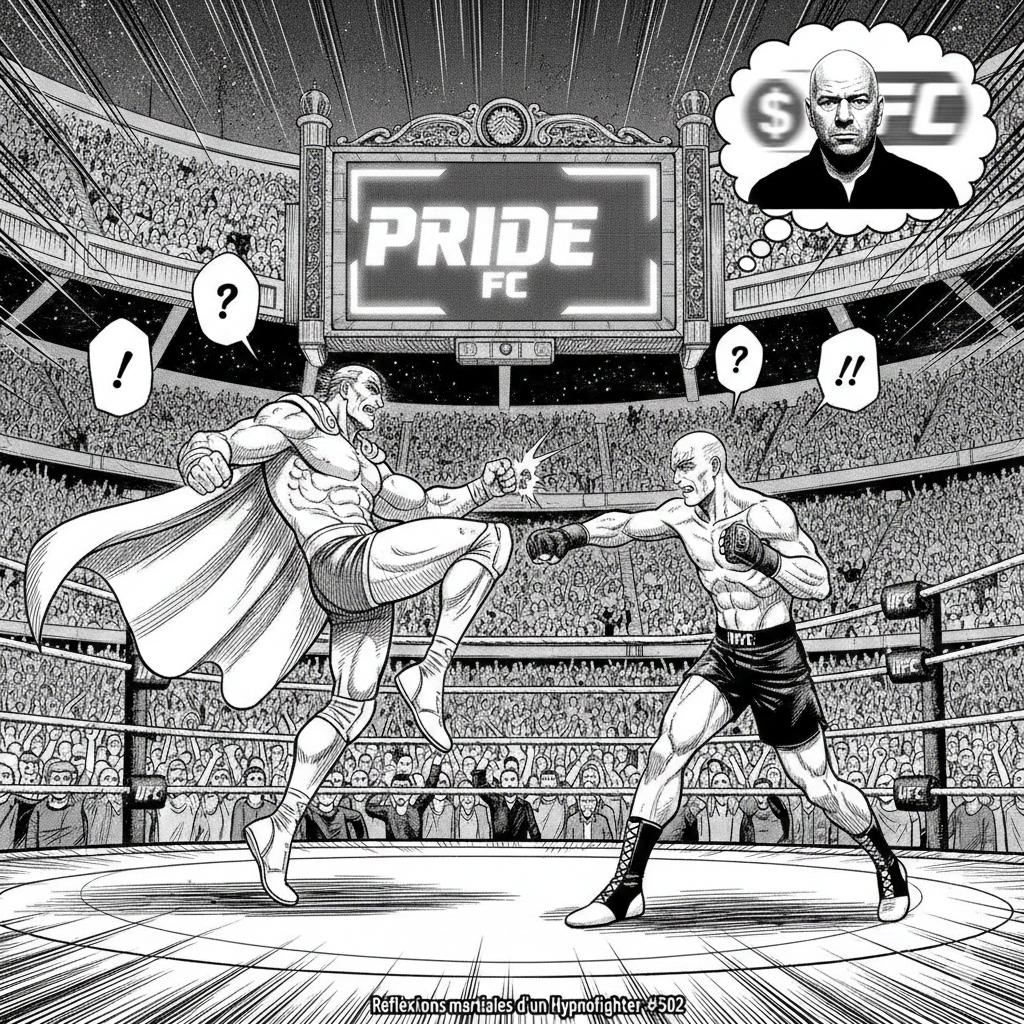
Pendant le Pride FC, qu’on ait aimé ou non, outre les règles qui pouvaient facilement choquer les moins amateurs de Vale Tudo, les « Freak Fights » dont tout le monde se moquait sont encore régulièrement mis en avant par les algorithmes. De plus, la plupart des combats, même s’ils étaient mis en scène, apportaient de la reconnaissance autant pour les athlètes que pour l’organisation.

Ce lien avec le Pro Wrestling et le fait même que des « Catch Wrestlers » aient tenté leur chance dans des combats plus réels répondaient à un fantasme des spectateurs, développé depuis des décennies dans les mangas : savoir si un « catcheur » pouvait mettre en pratique ce qu’il faisait en combat « réel ».

Outre l’organisation titanesque, les salles incroyables et les combattants dangereux, avec des « match makings » complètement déséquilibrés mais générant un effet voyeuriste chez les spectateurs, le Pride FC est ce que l’UFC risque de devenir dans les décennies à venir.

La boxe anglaise a déjà cédé au monde du divertissement avant tout ; le MMA, tôt ou tard, verra sa popularité se réduire, et nous risquons, surtout avec le départ de Dana White, une réorientation de ce qu’est le MMA.

Prenez ce qui est bon et juste pour vous. Be One, Pank.

Martial Reflections of a Hypnofighter #502: Pride FC Understood Everything

Is it because they are in a country where Pro Wrestling, meaning entertainment fights, is commonplace? As a reminder, if we have implemented fixed or simply spectacular fights, it’s because show buyers primarily want to have a good time. They don’t necessarily expect pugilistic quality, technical or tactical, but rather an emotionally enjoyable experience.

When we see how stars are « built up, » like Paddy (who remains very strong) or O’Malley (also an excellent striker), we understand that what is chosen by matchmakers is what could attract spectators and generate big sequences for social media dissemination.

During Pride FC, whether you liked it or not, besides the rules that could easily shock less avid Vale Tudo fans, the « Freak Fights » that everyone mocked are still regularly highlighted by algorithms. Moreover, most fights, even if staged, brought recognition for both the athletes and the organization.

This link with Pro Wrestling and the very fact that Catch Wrestlers tried their luck in more real fights answered a spectators’ fantasy, developed for decades in manga: to know if a « wrestler » could practice what he did in « real » combat.

Beyond the colossal organization, incredible venues, and dangerous fighters, with completely unbalanced match-making that generated a voyeuristic effect on spectators, Pride FC is what the UFC risks becoming in the coming decades.

English boxing has already succumbed to the entertainment business above all; MMA, sooner or later, will see its popularity diminish, and we risk, especially with Dana White’s departure, a reorientation of what MMA truly is.

Take what is good and right for you. Be One, Pank.

Réflexions martiales d’un Hypnofighter #497 : La rétention de garde en Jiu-Jitsu

Comme beaucoup de combattants de MMA, quand j’ai commencé à combattre après la découverte du Jiu-Jitsu, je voulais me retrouver dos au sol pour placer un triangle ou un jujigatame (clé de bras). De plus, en France, au début de la pratique, les percussions au visage au sol étaient très rarement autorisées.

Comme pour beaucoup de pratiquants, le combat depuis la garde (sur le dos) était pour moi l’élément différenciateur du Jiu-Jitsu. Avec les années, ma réflexion autour du combat de rue, et plus encore avec l’évolution du MMA, a changé : l’idée d’être sur le dos n’était plus du tout ce que je souhaitais. Je savais même qu’avec certains types de combattants, cela pourrait s’avérer très complexe.

Pourtant, en compétition IBJJF/CFJJB, s’il ne se passe pas grand-chose, c’est souvent le combattant qui est dessous (c’est-à-dire en garde) qui obtiendra la décision arbitrale. Je me demandais pourquoi. Dans les différents textes que je lis sur le BJJ, la Luta Livre et le Catch Wrestling, il y a peut-être une réponse.

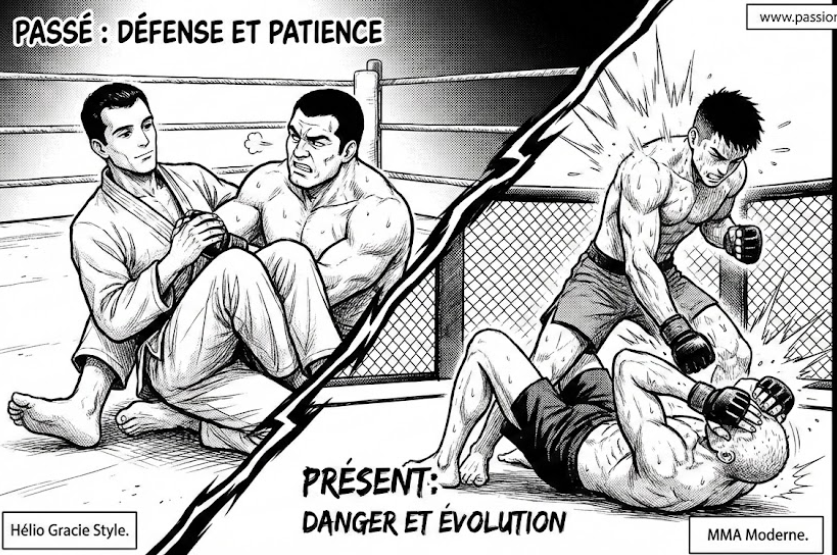
Rappelez-vous que les combats jusqu’aux années 70 ressemblaient au Judo et pouvaient même accepter le principe du tombé de la lutte (pin). Les frères Gracie, et surtout Hélio, suivaient la doctrine de self-défense de Carlos, son aîné. C’est notamment parce qu’il n’était pas bon en Tachi Waza (debout en mode projection). Du coup, il tirait la garde et la fermait, sachant que les combats pouvaient souvent durer plusieurs rounds de 10 minutes (sur ring).

Il n’y avait pas de frappes ; les combats de Vale Tudo jusqu’aux années 50-60 étaient assez rares. Par conséquent, il fatiguait les adversaires qui étaient souvent des spécialistes de projection et de contrôle. Les combats finissaient majoritairement en match nul (draw) ou par des soumissions de la part d’Hélio.

Il est possible que Carlos Jr, avec les règles du Jiu-Jitsu sportif, ait voulu mettre en valeur ce qui fait la vraie différence du Jiu-Jitsu par rapport aux autres styles de préhension, en favorisant les combattants qui tirent la garde. Rappelez-vous que la première génération de pratiquants de Jiu-Jitsu Gracie n’était pas bonne du tout debout ; d’où, comme en Kosen Judo, le développement du sol.

Prenez ce qui est bon et juste pour vous. Be One, Pank. https://www.passioncombat.net/

 Martial Reflections of an Hypnofighter #497: Guard Retention in Jiu-Jitsu

Like many MMA fighters, when I started fighting after discovering Jiu-Jitsu, I wanted to end up on my back on the ground to set up a triangle choke or a jujigatame (armbar). Furthermore, in France, in the early days of the practice, strikes to the face on the ground were very rarely allowed.

For me, like many practitioners, fighting from the guard (on one’s back) was the differentiating element of Jiu-Jitsu. Over the years, my reflections on street fighting, and even more so with the evolution of MMA, changed: the idea of being on my back was no longer what I wanted at all. I even knew that against certain types of fighters, it could prove very complex.

However, in IBJJF/CFJJB competition, if not much is happening, it is often the fighter underneath (i.e., in guard) who will get the referee’s decision. I wondered why. In the various texts I read on BJJ, Luta Livre, and Catch Wrestling, there might be an answer.

Remember that fights up until the 70s resembled Judo and could even accept the wrestling principle of the pin. The Gracie brothers, and especially Helio, followed the self-defense doctrine of Carlos, his elder brother. This was notably because he was not good at Tachi Waza (standing throws). Therefore, he pulled guard and closed it, knowing that fights could often last for several 10-minute rounds (in a ring).

There were no strikes; Vale Tudo fights until the 50s and 60s were quite rare. Consequently, he tired out opponents who were often specialists in throws and control. The fights mostly ended in a draw or with submissions by Helio.

It is possible that Carlos Jr., with sporting Jiu-Jitsu rules, wanted to highlight what makes the true difference of Jiu-Jitsu compared to other grappling styles by favoring fighters who pull guard. Recall that the first generation of Gracie Jiu-Jitsu practitioners was not good at all standing up; hence, just like in Kosen Judo, the development of ground fighting.

Take what is good and right for you. Be One, Pank. https://www.passioncombat.net/

Réflexions martiales d’un Hypnofighter #479 : La Puissance de la Projection

Nous le savons tous, la projection, à l’inverse du takedown, a pour but de percuter le sol. Nous savons que tomber est une chose dangereuse pour tous les combattants, soit parce qu’il peut y avoir une avalanche de frappes après, soit parce qu’un adversaire gère le sol, soit parce que nous pouvons être blessé et difficilement continuer à nous défendre.

C’est le cas de ce combat de championnat que nous avons eu cette nuit, avec le bras qui semble s’être disloqué (le combat vient de se finir, nous n’avons pas d’informations pour le moment), et donc le combat s’est terminé sur abandon. Si vous regardez souvent le MMA, il y a peut-être une chose qui vous marque depuis des années : la tension que beaucoup de combattants mettent sur leur bras pour scrambler directement et ne pas rester au sol.

Et si nous savons une chose dans les ukemis, c’est d’absorber plutôt que de bloquer l’impact. Le souci, sur des angles moins courants, c’est que notre corps ne supporte pas la pression sur le membre ou la partie qui est impactée au sol. Le match de Merab est en cours et il se fait casser par Yan. À un moment, Merab lève complètement son opposant et le met sur l’épaule pour le planter au sol.

Seulement, ce type de projection attendu et sur un sol de cage n’est pas assez effectif pour empêcher son opposant de tranquillement se relever et retourner en pied-poings. Nos lutteurs, samboïstes ou judokas en MMA ne parviennent pas toujours à faire mal sur la projection, parce que parfois l’impact recherché ne donne pas de résultat et l’effort effectué n’amène pas de contrôle ou de position forte.

C’est vraiment une arme potentiellement intéressante mais pas assez peaufinée pour la cage ou même le grappling, où les hors-combats sur projection sont très rares.

Prenez ce qui est bon et juste pour vous. Be One, Pank. https://www.passioncombat.net/

Martial Reflections of an Hypnofighter #479: The Power of the Projection

We all know that projection, unlike a takedown, aims to hit the ground. We know that falling is a dangerous thing for all fighters, either because there can be an avalanche of strikes afterwards, or an opponent who controls the ground, or because we can get injured and find it difficult to continue defending ourselves.

This was the case in the championship fight we had last night, with the arm appearing to be dislocated (the fight has just ended, we have no information for the moment), and so the fight ended in a submission. If you often watch MMA, there might be one thing that has stood out to you for years: the tension that many fighters put on their arms to scramble directly and not stay on the ground.

And if we know one thing in ukemis, it’s to absorb rather than block the impact. The problem, with less common angles, is that our body cannot withstand the pressure on the limb or part that is impacted on the ground. Merab’s match is ongoing and he’s getting broken by Yan. At one point, Merab completely lifts his opponent and puts him on his shoulder to slam him to the ground.

However, this type of expected projection on a cage floor is not effective enough to prevent his opponent from calmly getting back up and returning to striking. Our wrestlers, Sambo practitioners, or judokas in MMA do not always manage to inflict damage with a projection, because sometimes the desired impact does not yield results and the effort made does not lead to control or gaining a strong position.

It’s really a potentially interesting weapon but not refined enough for the cage or even grappling, where knockouts from projections are very rare.

Take what is good and right for you. Be One, Pank. https://www.passioncombat.net/

Réflexions Martiales d’un Hypnofighter #470 : L’enseignement de Sensei Seisuke

Hier, je suis parti en stage de karaté Shorin Ryu que j’avais repéré sur le site de la fédération. Il s’est avéré que c’était Sensei Seisuke Adaniya qui animait ce moment. Il nous a fait travailler sur ce qu’il a nommé la Connexion Corporelle. Et ce fut très instructif de pouvoir faire ces exercices de posture et d’alignement.

Ce sont des concepts que j’ai déjà vus en Aïki ou dans certaines écoles chinoises, et comme souvent avec la vision Okinawaienne, il y a une souplesse même dans l’enseignement et l’apprentissage que je trouve passionnante. J’ai eu la chance de pouvoir être le Uke du sensei qui partageait ses connaissances, ce qui m’a fait ressentir ce qu’il enseignait.

Et j’ai pu entrevoir quelque chose d’intéressant, un concept que l’on connaît bien en Aïkido, en Judo avec certains anciens, parfois en BJJ : le principe d’unité et de non-opposition. Alors bien sûr, nous sommes dans des exercices, ce n’est pas un randori, ce n’est pas non plus de la self-défense ; c’est ce qui, je pense, donne une substance au « do » du Karaté.

Une démarche qui se voit dans la durée, et c’est d’ailleurs pour cette raison et au travers de ses expériences de vie que Sensei Seisuke a pu développer sa méthode.

Je n’ai pas pu rester toute la journée, mais le peu qu’il a enseigné est déjà à développer et à répéter. Le manque de Uke dans cette recherche sera sûrement un peu pénalisant ; il va falloir que j’arrive à l’adapter à mes logiques BJJ/Luta ou MMA. Seulement, dans ces contextes, les phases d’alignement comme il le propose me semblent pour le moment complexes et je risque de me faire arracher la tête (soit sur une droite, soit avec une guillotine).

L’unité et la non-opposition, si avec mon petit niveau je le ressens parfois, je n’arrive pas à l’appliquer dans des combats intenses et j’avoue que je ne vois personne le faire ; cela reste des exercices ou de la démonstration. En tout cas, n’hésitez pas à aller à la rencontre de ce Sensei vraiment sympa et plein de savoir.

Prenez ce qui est bon et juste pour vous. Be One, Pank. https://www.passioncombat.net/

Martial Reflections of an Hypnofighter #470: Sensei Seisuke

Yesterday, I attended a Shorin Ryu karate seminar that I had found on the federation’s website. It turned out that Sensei Seisuke Adaniya was leading the event. He had us work on what he called Body Connection. And it was very enjoyable to practice these posture and alignment exercises.

These are concepts I’ve already encountered in Aïki or in some Chinese schools, and as often with the Okinawan vision, there’s a flexibility even in the teaching and learning that I find fascinating. I had the chance to be the Sensei’s Uke as he shared his knowledge, which allowed me to truly feel what he was teaching.

And I caught a glimpse of something interesting, a concept well-known in Aikido, in Judo with some elders, sometimes in BJJ: the principle of unity and non-opposition. Of course, these are exercises; it’s not randori, nor is it self-defense; it’s what, I believe, gives substance to the « do » of Karate.

An approach that unfolds over time, and it is for this reason and through his life experiences that Sensei Seisuke has been able to develop his method.

I couldn’t stay all day, but what little he taught is already worth developing and repeating. The lack of a Uke in this exploration will likely be a bit penalizing; I’ll have to adapt it to my BJJ/Luta or MMA logic. However, in these contexts, the alignment phases he proposes seem complex to me for now, and I risk getting my head torn off (either with a straight punch or a guillotine choke).

Unity and non-opposition, while I sometimes feel it at my humble level, I can’t apply it in intense fights, and I confess I don’t see anyone doing it; it remains confined to exercises or demonstrations. In any case, don’t hesitate to meet this truly kind and knowledgeable Sensei.

Take what is good and right for you. Be One, Pank. https://www.passioncombat.net/

Réflexions martiales d’un Hypnofighter #457 : L’Impact des Projections au Sol

Le dernier UFC a rappelé un élément martial important, parfois oublié dans une dynamique sportive. Almeida a pu emmener Volkov au sol comme il le souhaitait. On peut valoriser cette capacité à maîtriser un adversaire au sol, un peu comme on l’a mis en avant durant la période « self-defense » du Gracie Jiujitsu.

Seulement, si une fois au sol je ne finalise pas, et dans une configuration de combat urbain, outre le danger d’être à terre, il n’est pas si simple de placer une clé ou un étranglement lorsque l’opposant/agresseur bouge dans tous les sens pour se relever, soit pour fuir, soit pour reprendre l’attaque.

On a observé la même chose au niveau sportif : pas de soumission, mais pire, pas de percussions. Au final, le Brésilien perd son match alors qu’il a contrôlé. Et c’est là que l’on peut revenir aux origines du BJJ, le Kodokan Judo. En Judo, on parle de projection : on cherche à faire percuter l’opposant au sol.

Cette frappe complexe que peuvent être ces techniques de projections, autant dans la rue qu’en cage, peut tout changer. Si vous avez déjà chuté dans la rue, sur une plaque de glace – et je ne parle pas des accidents de vélo ou de trottinette – vous avez possiblement ressenti quelques douleurs et peut-être même vous vous êtes blessé. Si vous avez eu la chance d’être sur des tatamis avec de bons judokas ou lutteurs, là aussi, même si on est sur un tatami, préparé avec nos connaissances des ukemis (brise-chute), on peut subir un choc important et se retrouver amoindri en énergie, voire assommé.

En MMA, il faut choisir : soit on veut montrer une efficience de l’amenée au sol en faisant percuter avec une projection, soit accepter que le takedown soit « inoffensif » mais qu’ensuite, il faille frapper ou soumettre l’opposant pour marquer les juges sur l’efficacité de cette phase de combat.

Un questionnement stratégique en fonction des disciplines initiales des combattants.

Prenez ce qui est bon et juste pour vous. Be One, Pank. https://www.passioncombat.net/

Martial Reflections of a Hypnofighter #457: The Impact of Takedowns

The last UFC reminded us of an important martial element sometimes forgotten in a sporting dynamic. Almeida was able to take Volkov to the ground as he wished. We can value this ability to take an opponent to the ground, much like it was promoted during the « self-defense » period of Gracie Jiujitsu.

However, if once on the ground I don’t submit, and in an urban combat setting, besides the danger of being on the ground, it’s not so simple to apply a lock or choke when the opponent/aggressor is moving frantically to get back up, either to flee or to resume the attack.

We saw the same thing in sports: no submission, but worse, no strikes. In the end, the Brazilian lost his match despite having controlled it. And this is where we can return to the origins of BJJ, Kodokan Judo. In Judo, we talk about projections: we seek to make the opponent hit the ground.

This complex strike that these projection techniques can be, both in the street and in the cage, can change everything. If you have ever fallen in the street, on a patch of ice – and I’m not talking about bicycle or scooter accidents – you have likely felt some pain and perhaps even injured yourself. If you have been fortunate enough to be on tatami mats with good judokas or wrestlers, even there, even if we are on a tatami, prepared with our knowledge of ukemis (breakfalls), we can take a big shock and find ourselves diminished in energy, or even knocked out.

In MMA, one must choose: either one wants to demonstrate the efficiency of a takedown by making the opponent hit the ground with a projection, or accept that the takedown is « inoffensive » but that afterward, one must strike or submit the opponent to impress the judges on the effectiveness of this combat phase.

A strategic questioning depending on the initial disciplines of the fighters.

Take what is good and right for you. Be One, Pank. https://www.passioncombat.net/

Réflexions martiales d’un Hypnofighter #454 : Combattre, c’est sérieux

Hier, je parlais avec un ami de plus en plus engagé dans la Fédération de MMA, et il me disait que depuis qu’il se retrouve devant la cage, qu’il voit les combattants et entend les impacts, il a compris que les combattants veulent physiquement anéantir l’adversaire avec une intention « mauvaise ».

Il a réalisé que les professionnels, comme beaucoup d’amateurs, ne veulent pas simplement gagner, ils veulent détruire. Et c’est une réalité que nous comprenons quand nous avons beaucoup combattu, surtout lorsqu’il y a des frappes et des KO. Il y a chez les combattants cette intention de faire mal, de prendre plaisir à abîmer l’autre. C’est une logique de domination, une compensation vis-à-vis de différents éléments plus ou moins conscients chez ces derniers.

Quand on dit que l’on va « jouer » en compétition, c’est possible dans des disciplines comme le BJJ où il n’y a pas ou peu de côté « méchant ». On voit déjà que beaucoup de combattants ne veulent pas combattre avec des règles acceptant les « heel hooks », car c’est une technique qui peut détruire sans que nous puissions vraiment « nous défendre », un peu comme un KO ou une fracture.

De plus, une blessure suite à cette technique peut mettre fin à une carrière de compétition ou demander des mois, voire des années, pour récupérer. Quand il y a des personnes avec une intention de détruire, comme c’est le cas dans les sports de combat, nous ne sommes plus dans le « jeu ». Venir avec un état d’esprit qui n’est pas prêt à faire face à cette « haine orientée » peut déranger et, plus généralement, peut entraîner un temps de retard dans le combat, parce qu’on se réveille après qu’une frappe nous ait fait mal, et c’est parfois le début de la fin.

Si les arts martiaux et les sports de combat donnent dans l’imaginaire collectif une image de contrôle et de respect, cela n’existe pas chez beaucoup d’athlètes et de champions pendant le temps de la compétition, où il n’y a qu’une seule idée : détruire pour gagner, faire mal, envoyer un message aux prochains opposants. Le respect ne reviendra qu’après, les rituels « martiaux » reprendront leur place.

Qu’importe le récit que nous avons créé autour du combat ritualisé, il peut être terrifiant et plein de haine ou d’intentions associées à nos bas instincts de prise de pouvoir sur l’autre, sans limite.

Prenez ce qui est bon et juste pour vous. Be One, Pank https://www.passioncombat.net/

Martial Reflections of a Hypnofighter #454: Fighting is Serious

Yesterday, I was talking with a friend who is increasingly involved in the MMA Federation, and he told me that ever since he found himself in front of the cage, seeing the fighters and hearing the impacts, he understood that fighters physically want to annihilate their opponent with a « bad » intention.

He realized that professionals, like many amateurs, don’t just want to win, they want to destroy. And this is a reality we understand when we have fought a lot, especially when there are strikes and KOs. There is this intention among fighters to hurt, to take pleasure in damaging the other. A logic of domination, a compensation in relation to different, more or less conscious elements within them.

When we say we’re going to « play » in competition, it’s possible in disciplines like BJJ where there’s little to no « mean » side. We already see that many fighters don’t want to fight with heel hooks, because it’s a technique that can destroy without us really being able to « defend ourselves, » a bit like a KO or a break.

Moreover, an injury can end a competitive career or take months or years to recover. When there are people with an intention to destroy, as is the case in combat sports, we are no longer « playing. » Coming with a mindset that is not ready to face this « oriented hatred » can be disturbing, and more generally, can cause a delay in the fight, because we wake up after a strike has hurt us, and that is sometimes the beginning of the end.

If martial arts and combat sports give a collective image of control and respect, this does not exist among many athletes and champions during competition time, where there is only one idea: destroy to win, hurt, send a message to future opponents. Respect will only return afterwards, and the « martial » rituals will resume their place.

No matter what narrative we have created around ritualized combat, it can be terrifying and full of hatred or intentions associated with our base instincts to take power over the other, without limits.

Take what is good and right for you. Be One, Pank https://www.passioncombat.net/