Réflexions Martiales d’un Hypnofighter #449 : L’Influence de la Lutte dans les Systèmes de Combat Modernes

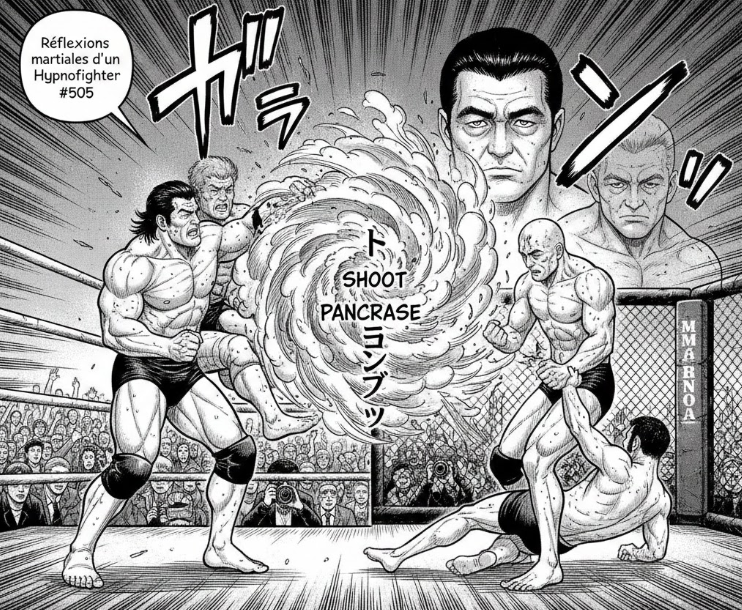
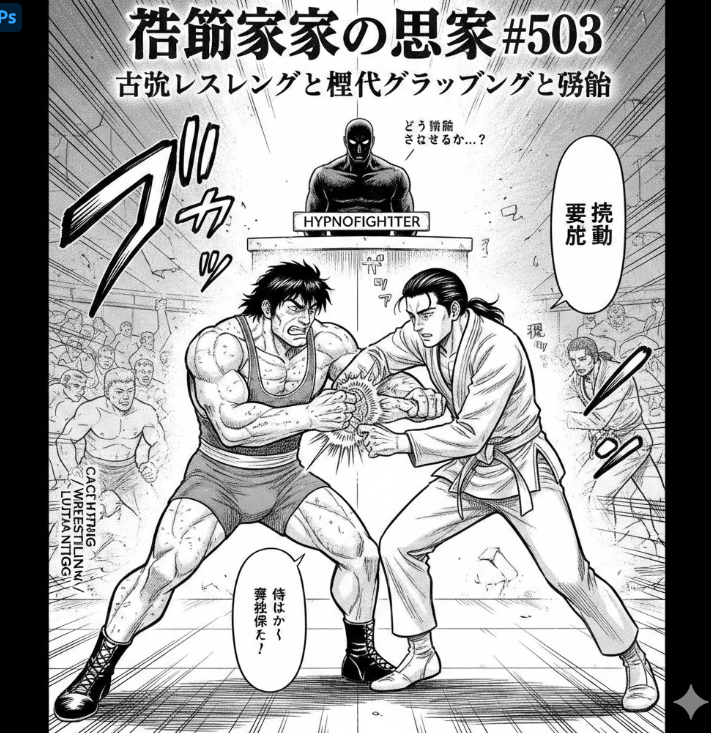
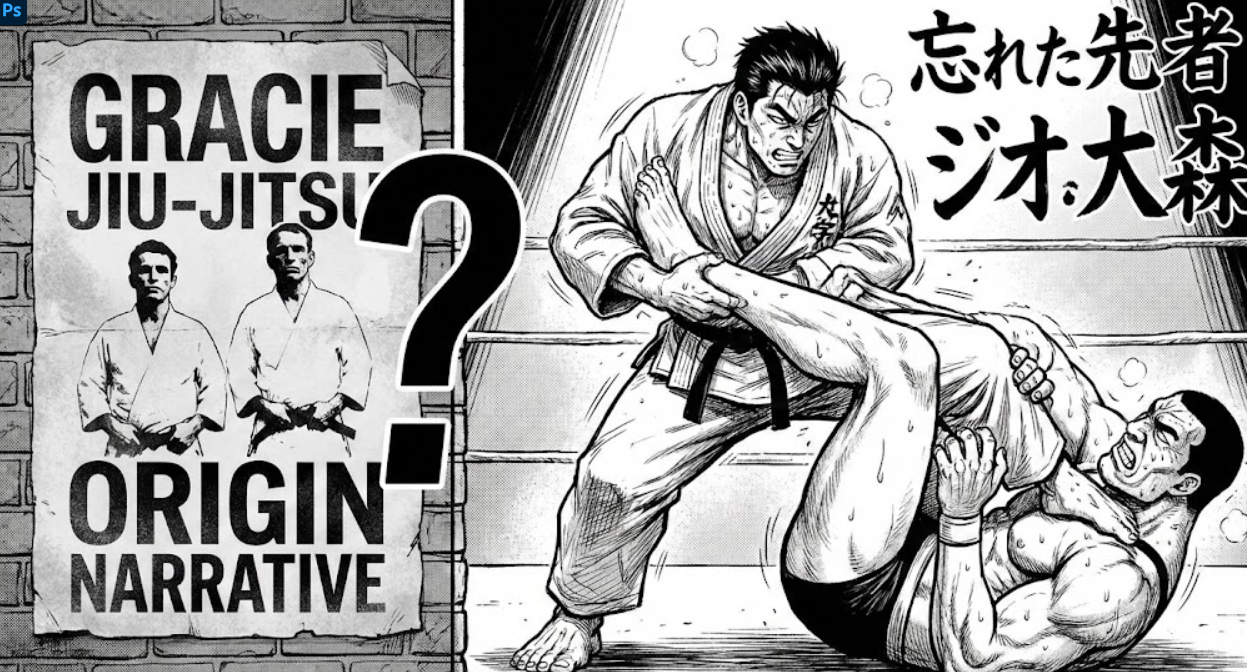
Il est amusant de constater à quel point la lutte a pu influencer de nombreux systèmes de combat modernes. Quand on lit des ouvrages sur le Jiu-Jitsu, on sait que Rolls Gracie, celui qui a révolutionné après Carlson le système que nous aimons tant, avait une vraie passion pour la lutte. L’impact d’un lutteur américain, Bob Anderson, a véritablement offert une ouverture à sa génération.

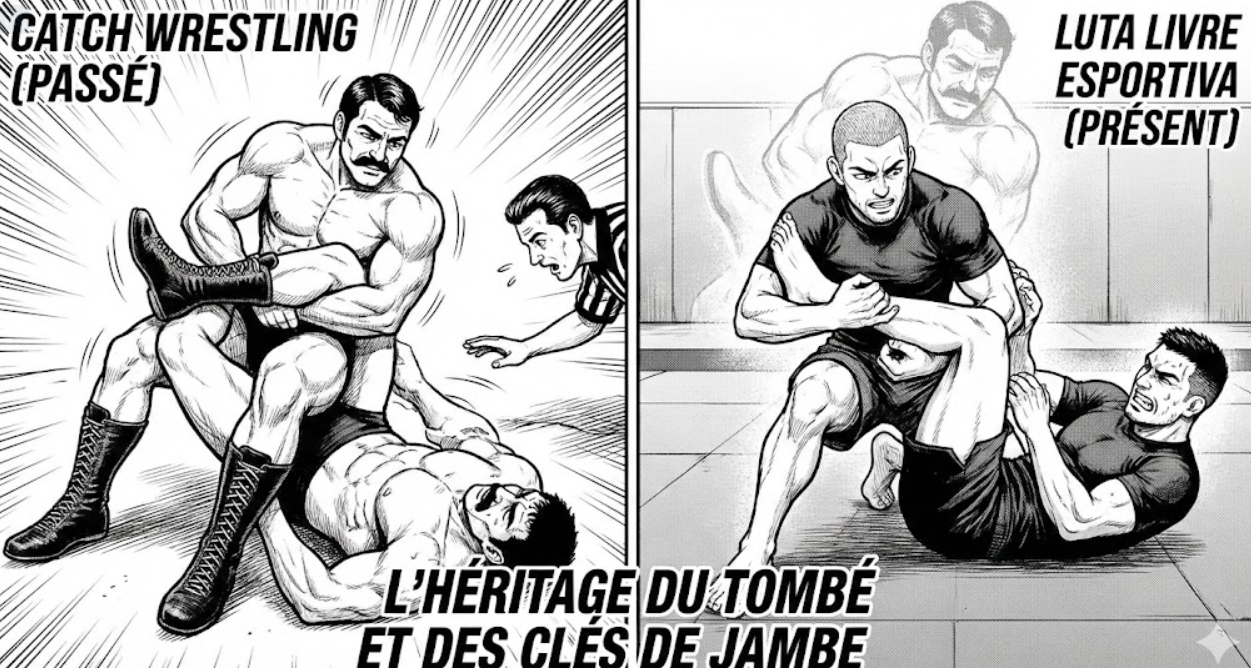
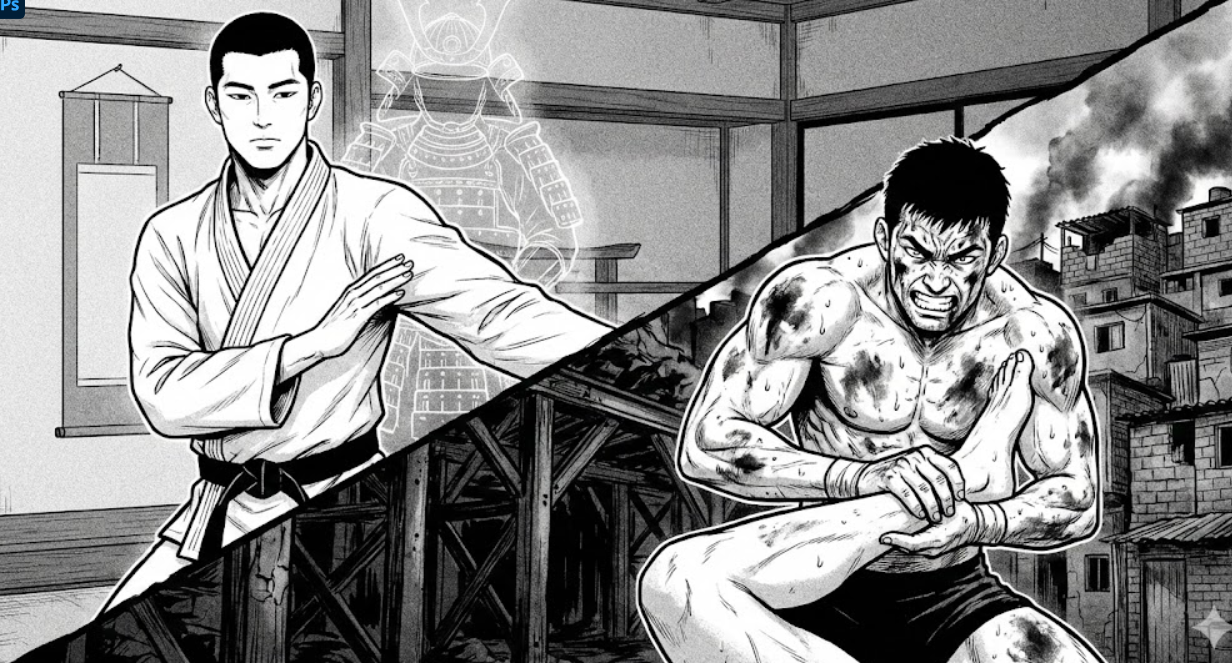
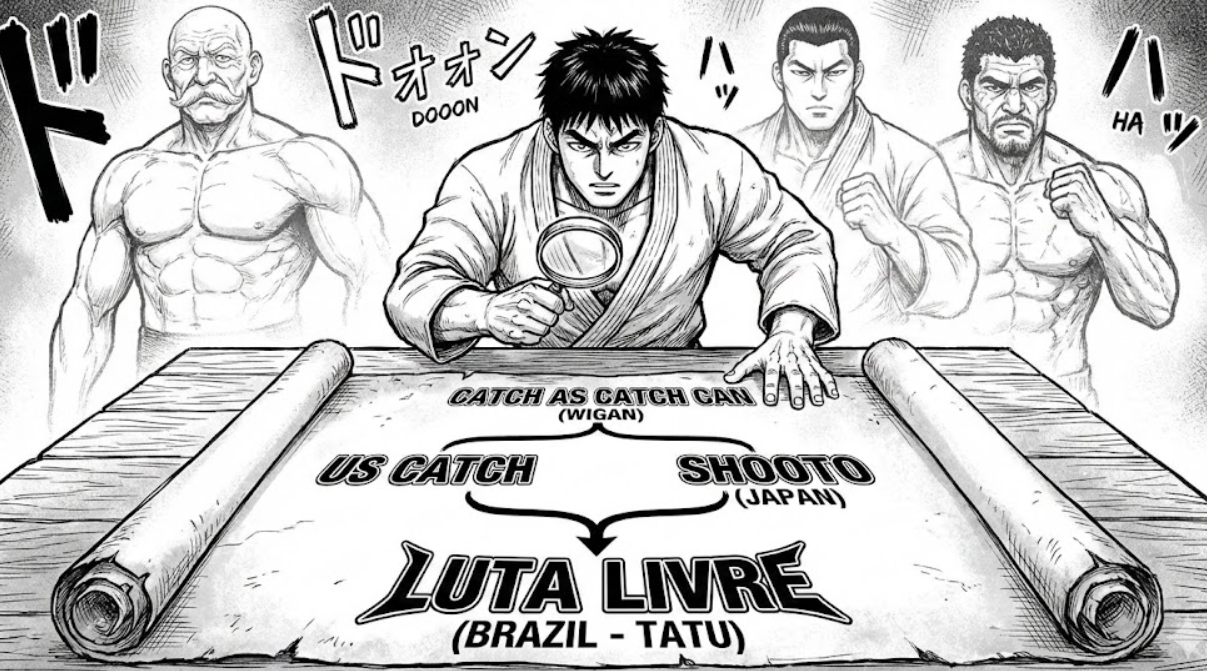
Pour la Luta Livre, cette discipline, dérivée du Catch Wrestling Britannique, a été mise en place par un lutteur/catch wrestler, Euclydes « Tatu » Hatem, plaçant la lutte au centre d’un travail de combat à soumission, alors que les Gracie ont tiré leur expérience du Judo Kodokan. Ceci explique pourquoi les « Lutadores » à l’époque étaient très axés sur la lutte et pouvaient manquer de finesse au sol.

Karl Gotch, qui combattit en 1948 aux Jeux Olympiques en lutte libre et gréco-romaine avant de se mettre au Catch Wrestling à la Snake Pit (Billy Riley) et d’exporter cette connaissance dans un pays qui a également formé de grands lutteurs, le Japon, est celui qui forma Sayama, lequel nous proposa le Shoot Wrestling qui est devenu ce que nous connaissons en MMA sous le nom de Shooto.

Et nous pouvons parler de l’influence d’un Dan Severn ou de Mark Coleman qui ont mis au centre du MMA moderne l’importance de la lutte et la création du « ground and pound ».

La lutte est le système de combat qui possède l’une des plus grandes capacités d’adaptation et une histoire technique hors du commun. Aucun autre système de combat n’a une si longue domination dans le combat et n’a influencé des styles divers à travers le monde. De plus, chaque nation a sa propre forme de lutte, rappelant que la lutte est naturelle (mais tellement difficile), tout comme frapper les autres (les boxes) l’est aussi.

Prenez ce qui est bon et juste pour vous.

Be One,

Pank

Martial Reflections of a Hypnofighter #449: The Influence of Wrestling in Modern Combat Systems

It’s amusing to see how much wrestling has influenced numerous modern combat systems. When you read books on Jiu-Jitsu, you know that Rolls Gracie, the one who revolutionized the system we love so much after Carlson, had a real passion for wrestling. The impact of a US wrestler, Bob Anderson, truly offered an opening to his generation.

For Luta Livre, this discipline, a derivative of British Catch Wrestling, was established by a wrestler/catch wrestler, Euclydes « Tatu » Hatem, placing wrestling at the center of a submission grappling approach, while the Gracies drew their experience from Kodokan Judo. This explains why the « Lutadores » at the time were very wrestling-focused and could lack finesse in groundwork.

Karl Gotch, who competed in 1948 in both freestyle and Greco-Roman wrestling at the Olympic Games before getting into Catch Wrestling at the Snake Pit (Billy Riley) and exporting this knowledge to a country that also trained great wrestlers, Japan, is the one who trained Sayama, who proposed Shoot Wrestling, which became what we know in MMA as Shooto.

And we can talk about the influence of a Dan Severn or Mark Coleman, who placed the importance of wrestling and the creation of « ground and pound » at the center of modern MMA.

Wrestling is the combat system with one of the greatest capacities for adaptation and an extraordinary technical history. No other combat system has had such a long domination in combat and influenced various fighting styles across the world. Moreover, each nation has its own form of wrestling, reminding us that wrestling is natural (but so difficult), just as striking others (boxing) is too.

Take what is good and right for you.

Be One,

Pank

Réflexions Martiales d’un Hypnofighter #275 : Les manipulations de cervicales

Les manipulations cervicales, souvent perçues comme brutales en Luta Livre et Catch Wrestling, offrent une dynamique unique dans le grappling. Avec la bonne technique, même un combattant de moindre gabarit peut exploiter ces mouvements pour contrôler et stresser son adversaire.

En Luta Livre et Catch Wrestling (son origine), il y a un élément qui n’est pas des plus fins mais qui offre des contraintes et une dynamique en combat : les manipulations de cervicales, comme le Nelson et autres techniques similaires.

En ce moment, nous les travaillons à l’académie, et il est intéressant de constater à quel point ces techniques sont souvent considérées comme « brutes. » Contrairement à de nombreuses techniques issues du Jiujitsu, qui pivotent autour de points de force pour attaquer ou balayer, le Lutador exploite ici un point fixe, généralement la main ou l’avant-bras, pour faire pivoter l’opposant.

La première réaction est souvent de penser que la force devient la base du mouvement. Et même si je crois que les sports de combat sont des sports de force combinés à des techniques qui apportent un levier supplémentaire, l’avantage des manipulations cervicales est que, même pour un combattant de gabarit plus léger, avec la bonne pression et les bons angles, il n’est pas nécessaire de forcer excessivement.

Les manipulations de cervicales peuvent rapidement être punitives, un peu comme les heel hooks, qui sont une sorte de « lucky punch » du grappling : un mouvement court, et où la blessure peut être rapide. Cette particularité, qu’il s’agisse des heel hooks ou des manipulations cervicales, est que si l’on se blesse, la convalescence peut durer plusieurs mois, voire laisser des séquelles. Cela engendre une réaction différente par rapport à d’autres contraintes imposées au corps.

Ce travail, assez rude au niveau de la tête, n’est certes pas un outillage prédominant en BJJ. Toutefois, dans une optique de Luta Livre ou de No-Gi, la tête est souvent visée comme un point de contrôle potentiel. Créer un stress, voire une action complète sur cette partie du corps, peut changer toute la dynamique d’un combat.

LutaLivre #CatchWrestling #Grappling #BJJ #NoGi #Danger

Prenez ce qui est bon et juste pour vous.

Be one,
Pank
https://www.passioncombat.net


Martial Reflections of a Hypnofighter #275: Cervical Manipulations

In Luta Livre and Catch Wrestling (its origin), there is an element that is not the most refined but adds constraints and dynamics to the fight: cervical manipulations, like the Nelson and similar techniques.

At the academy, we are currently working on these, and it’s interesting to see how often these techniques are considered brutal. Unlike many techniques from Jiujitsu, which pivot around points of force to attack or sweep, the lutador exploits a fixed point, usually the hand or forearm, to make the opponent pivot.

The initial reaction is often to think that strength is the basis of the movement. And while I believe that combat sports are strength sports combined with techniques that provide additional leverage, the advantage of cervical manipulations is that even a smaller fighter, with the right pressure and angles, won’t have to exert excessive force.

Cervical manipulations can quickly be punishing, much like heel hooks, which are a kind of « lucky punch » in grappling: a short movement where injury can happen rapidly. This specificity, whether it’s heel hooks or cervical manipulations, is that if you get injured, recovery can take several months, and there may even be lasting damage. This leads to a different reaction compared to other constraints placed on the body.

This work, quite harsh on the head, is certainly not a predominant tool in BJJ. However, in the context of Luta Livre or No-Gi, the head is often targeted as a potential control point. Creating stress, or even a full action on this part of the body, can change the entire dynamic of a fight.

LutaLivre #CatchWrestling #Grappling #BJJ #NoGi #Danger

Take what is good and right for you.

Be one,
Pank
https://www.passioncombat.net

Réflexions Martiales d’un Hypnofighter #226 : La Luta Livre et son combat perdu

J’adore la Luta Livre. C’est amusant, car dans la communauté du Jiujitsu, on me dit souvent que je ne suis pas un pro BJJ parce que je suis trop dans l’esprit Luta Livre. J’aime autant les deux systèmes, mais je trouve que la Luta Livre est plus cohérente avec ma vision martiale. Le Jiujitsu actuel est devenu très sportif et peut manquer d’efficacité dans des confrontations interstyles.

Gordon Ryan faisait une excellente remarque dans un podcast : la nouvelle ère du Nogi (BJJ, Luta, Grappling) s’axe sur deux évolutions majeures, les clés de jambes et la lutte debout. Cependant, cette dernière n’est pas réellement de la lutte olympique ou gréco-romaine, ni même du Judo ou du Sambo, mais une forme hybride qui mélange les amenées au sol et le tirage.

Il est vrai que dans la facette sportive, la qualité de l’amenée au sol n’est pas prioritaire. L’objectif n’est pas de mettre un adversaire à plat dos avec intensité, mais simplement d’entraîner le combat au sol et de le maintenir dans cette dimension, ce qui est très différent des luttes où avoir le dos au sol est synonyme d’échec.

Aujourd’hui, nous avons un travail debout spécifique, et c’est là le premier échec de la Luta Livre. Comme je vous l’avais partagé dans cet article : https://www.passioncombat.net/2024/04/reflexions-martiales-dun-hypnofighter_28.html,la Luta Livre est née du catch wrestling et mettait un gros focus sur le combat debout. Malheureusement, ils n’ont pas pu offrir l’évolution actuelle, à part peut-être les guillotines à la volée.

Le deuxième échec concerne les clés de jambes. Comment se fait-il que les gens aient dû attendre Dean Lister et surtout John Danaher alors que les lutadors en avaient fait leur spécialité? Le Jiujitsu, qui considérait les attaques de jambes comme les clés du pauvre et empêchait le travail en passage de garde, a pu ralentir son étude et son affinage, mais cela reste un jiujitsuka qui a propulsé ce domaine à un tout autre niveau.

Que faisaient les pratiquants de Luta Livre pendant des décennies, à part maintenir des techniques de catch wrestling des années 1920, inefficaces sans un physique de colosse?

C’est dommage pour le travail des passionnés de Luta Livre comme Flavio Santiago, dit Peroba, et Nicolas Renier, qui ont tenté de développer la discipline. Aujourd’hui, on ne peut plus vraiment différencier un bjjiste d’un lutador, à part que ce dernier peut parfois être moins bon sur les deux points qui auraient dû être sa spécialité.

Victoire absolue du BJJ sur la Luta, mais ce qui est cool, c’est que le Grappling a atteint un niveau incroyable.

LutaLivre #BJJ #Nogi #Leglocks #Takedown #NicolasRenier #FlavioPeroba #NRFight #FSteam

Prenez ce qui est bon et juste pour vous.

Be One,

Pank

http://www.passioncombat.net
__

Martial Reflections of a Hypnofighter #226: Luta Livre and Its Lost Battle

I love Luta Livre. It’s amusing because in the Jiujitsu community, I’m often told that I’m not a pro BJJ because I’m too much in the spirit of Luta Livre. I love both systems equally, but I find that Luta Livre aligns more coherently with my martial vision. Modern Jiujitsu has become very sport-oriented and can lack effectiveness in interstyle confrontations.

Gordon Ryan made an excellent point in a podcast: the new era of Nogi (BJJ, Luta, Grappling) focuses on two major evolutions—leg locks and stand-up wrestling. However, this stand-up is not really Olympic or Greco-Roman wrestling, nor even Judo or Sambo, but a hybrid form that blends takedowns and pulling.

It’s true that in the sport aspect, the quality of the takedown is not a priority. The goal is not to pin an opponent flat on their back with intensity but simply to bring the fight to the ground and maintain it in that dimension, which is very different from wrestling styles where having your back on the ground signifies failure.

Today, we have specific stand-up work, and this is the first failure of Luta Livre. As I shared in this article, Luta Livre was born from catch wrestling and placed a big focus on stand-up fighting. Unfortunately, they couldn’t offer the current evolution, except maybe the flying guillotines.

The second failure concerns leg locks. How is it that people had to wait for Dean Lister and especially John Danaher when the lutadors had made it their specialty? Jiujitsu, which considered leg attacks as the poor man’s keys and prevented work in guard passing, may have slowed its study and refinement, but it remains a jiujitsuka who propelled this field to a whole new level.

What were the Luta Livre practitioners doing for decades, apart from maintaining catch wrestling techniques from the 1920s that are ineffective without a colossus physique?

It’s a shame for the passionate work of Luta Livre enthusiasts like Flavio Santiago, known as Peroba, and Nicolas Renier, who tried to develop the discipline. Today, you can no longer really differentiate a bjjist from a lutador, except that the latter may sometimes be less good in the two areas that should have been his specialty.

Absolute victory of BJJ over Luta, but what’s cool is that Grappling has reached an incredible level.

LutaLivre #BJJ #Nogi #Leglocks #Takedown #NicolasRenier #FlavioPeroba #NRFight #FSteam

Take what is good and right for you.

Be One,

Pank

http://www.passioncombat.net