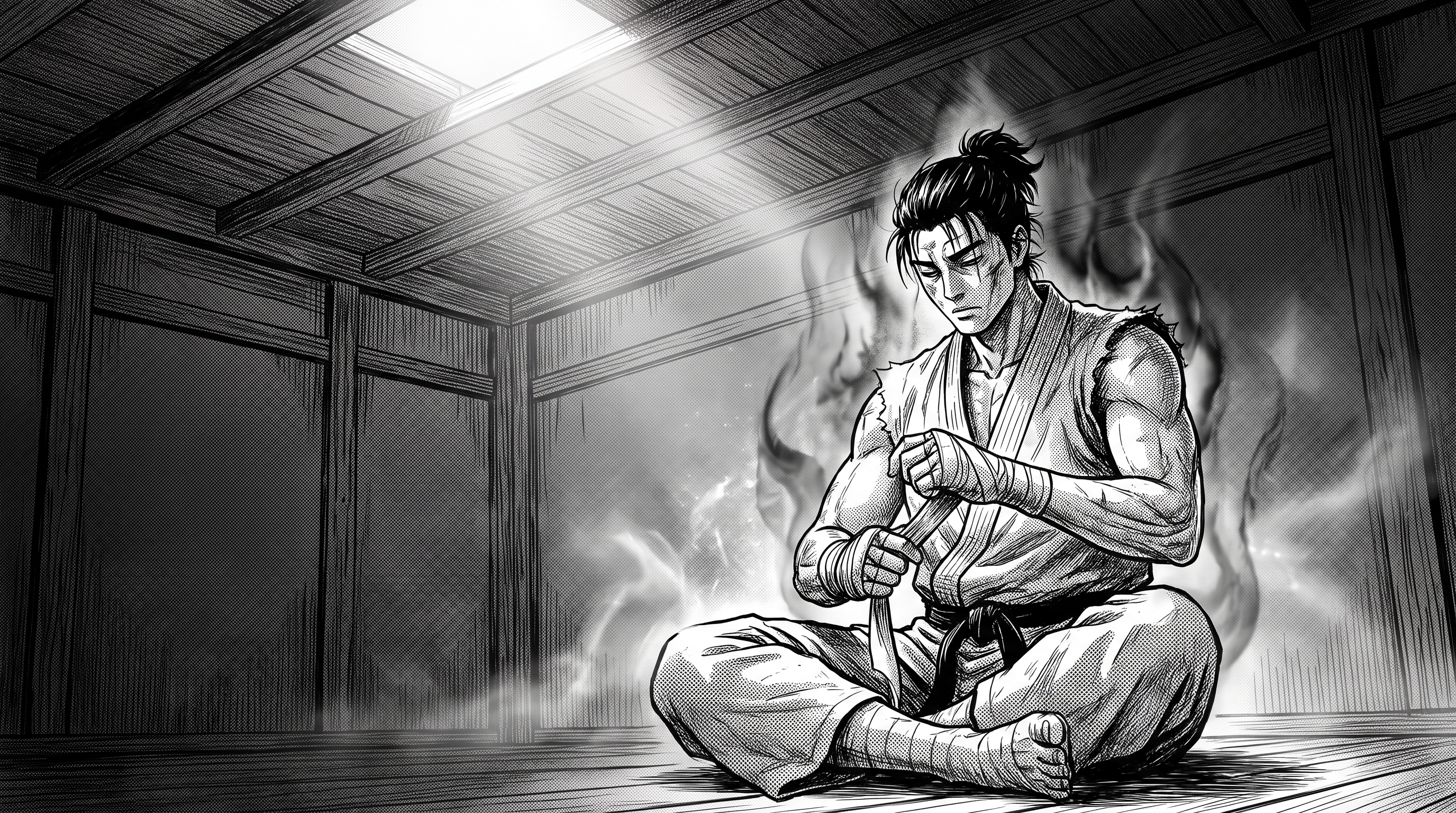
Dans la capsule du jour, je fais le parallèle avec les arts martiaux et le fait d’encaisser des coups ou des séquences difficiles pendant le combat. Plus on apprend à subir, plus on sait encaisser et tenir, plus on peut progresser. Seulement, si dans la vie il est, je pense, essentiel de savoir serrer les dents et continuer à trouver des solutions, parfois c’est trop.
C’est cette étape qui peut être difficile : le moment où il faut se reposer, se soigner, s’interroger. On peut avoir l’impression que nous sommes capables de tout gérer. Et si c’est parfois vrai dans de nombreuses situations, on a parfois la capacité de dépasser la période sombre sans pour autant se rendre compte qu’il faut récupérer.
C’est à ce moment-là que les hypnothérapeutes peuvent intervenir. On sait que beaucoup de personnes ne veulent pas trop parler, mais il faut néanmoins aller chercher les ressources, celles qui permettent de sortir du mode « fight » constant, pour juste retrouver de la sécurité ou, à minima, de l’apaisement.
Alors, quand faut-il aller récupérer avec des professionnels ? Au moment où l’on commence à saturer, quand tenir devient trop énergivore, quand on ne se recharge plus et qu’on reste très sensible ou complètement éteint. Autant les sportifs en surentraînement ou face à des ruptures que nous-mêmes, nous pouvons juste admettre que si le mot « aide » peut déranger, un soutien ou un coaching pourrait être acceptable…
Prenez ce qui est bon et juste pour vous. Be One, Pank. https://www.pank.one/blog
—
Reflections by Pank / Instantaneous No. 656: Resilience and Saturation: Overcoming Allostatic Load Through Therapeutic Intervention
In today’s commentary, I draw a parallel between martial arts and the capacity to absorb impacts or endure challenging sequences during combat. The more one learns to undergo strain, to absorb blows, and to hold ground, the more one can progress. However, while I believe it is essential in life to grit one’s teeth and continuously seek solutions, there are moments when it becomes excessive.
This transitional phase can prove particularly difficult: the exact moment requiring rest, recovery, and self-reflection. Individuals often maintain the perception that they are capable of managing any stressor. While this holds true in many situations, one may possess the capacity to navigate through a dark period yet fail to recognize the necessity of psychological and physiological recovery.
This critical threshold is where hypnotherapists can intervene. It is well established that many individuals prefer not to engage in extensive verbal disclosure; nevertheless, it remains imperative to access underlying resources—specifically those enabling an exit from a continuous « fight » response—to restore a sense of safety or, at the very least, emotional stabilization.
When, then, should one seek recovery through professional guidance? Precisely when saturation sets in, when maintaining resilience consumes excessive energy, when restorative processes fail, and when an individual remains hyper-reactive or emotionally blunted. Whether dealing with athletes experiencing overtraining syndrome, individuals coping with psychological ruptures, or general population stress, we must admit that even if the notion of « help » carries a stigma, receiving professional support or coaching can be a viable alternative…
Take what is good and right for you. Be One, Pank.

