Pour faire suite à la dernière réflexion, il est certain que si nous agissons, nous allons prendre de l’expérience et nous créer une histoire ; mais il y a aussi une forte chance que ce que nous allons initier ne fonctionne pas. Parfois, on se dit qu’on aurait dû plus préparer. C’est vrai, on aurait pu, mais on peut passer sa vie à préparer et à parler, tandis que le potentiel que rien ne soit fait se démultiplie.
Donnez-vous une limite de préparation et agissez. Dans le sport d’opposition, on le ressent : ce moment où on commence à bien voir ce que nous avons à faire, mais où le corps ne suit pas. Il est pris dans la pensée qui donne de bonnes indications, mais qui n’est pas suivie assez rapidement par l’action.
Du coup, soit on ne se lance pas et on perd, soit on y va, mais nous ne sommes plus dans le bon temps. Donc nous allons risquer de ne pas réussir ou, plus intéressant mais crevant, devoir serrer les dents et tenter que ce que nous avions préparé passe.
Diminuez vos préparations. Il y aura toujours plus d’étapes à rajouter, comme pour se dire que l’idée que ça peut réussir est plus sympa que de le vivre ou de se rendre compte que nous étions partis dans le monde des idées, particulièrement loin du monde matériel.
Osez la matérialité, le dur. Respectez la pensée, mais ne vous y soumettez pas sans cesse, même si c’est ce que nos sociétés ont tant valorisé. Parfois, être moins « intelligent » et plus pratique vous fera souvent tomber et encaisser des échecs, mais vous aurez des tas d’expériences et de compétences pour vous adapter et arriver, bon gré mal gré, à destination…
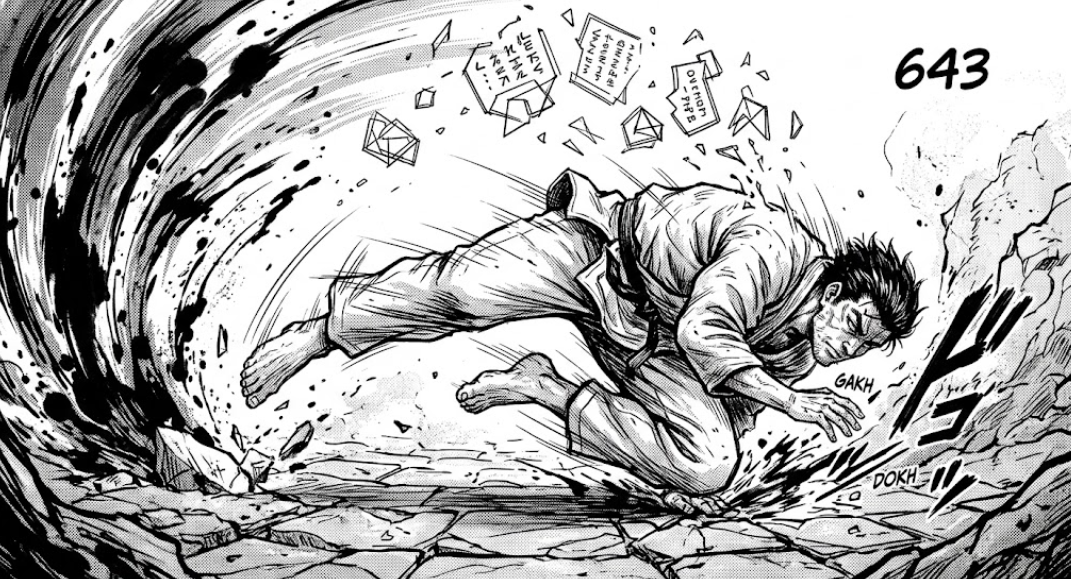
Agissez… Soyez prêt à la chute et à continuer…
Prenez ce qui est bon et juste pour vous. Be One, Pank. https://www.pank.one/blog
—
Pank’s Reflections / Snapshot No. 643: The Illusion of Preparation: Bridging the Gap Between Conceptualization and Action
Following up on the previous reflection, it is certain that by taking action, we gain experience and shape our own story; however, there is also a high probability that what we initiate will fail. At times, we reflect that we should have prepared more. That may be true—we could have—yet one can spend a lifetime preparing and deliberating while the likelihood of execution diminishing to zero.
Set a strict limit on preparation and act. In combat sports, one distinctly experiences that precise moment when the cognitive understanding of what needs to be done is clear, yet the physical body fails to keep pace. It becomes trapped in thought—a thought that offers valid insights, yet lacks the execution speed required for immediate kinetic response.
Consequently, we either hesitate and forfeit, or we commit outside the optimal window of opportunity. The latter choice risks failure or, more interestingly—though physically exhausting—forces us to grit our teeth and attempt to execute what was planned despite the lag.
Reduce your preparation phases. There will always be additional steps to add, as if the mere mental representation of success were more comforting than experiencing reality itself, or realizing how far we have strayed into the realm of abstract ideas at the expense of physical materiality.
Dare to engage with materiality, with the tangible raw effort. Respect cognition, but do not remain perpetually subordinate to it, despite society’s heavy overvaluation of abstract intellect. Occasionally, being less « intellectual » and more pragmatic will lead to frequent falls and setbacks; nevertheless, it will forge a wealth of experiential knowledge and adaptive skills that will ultimately, one way or another, bring you to your destination.
Act… Be prepared to fall, and keep moving forward…
Take what is good and right for you. Be One, Pank. https://www.pank.one/blog

