
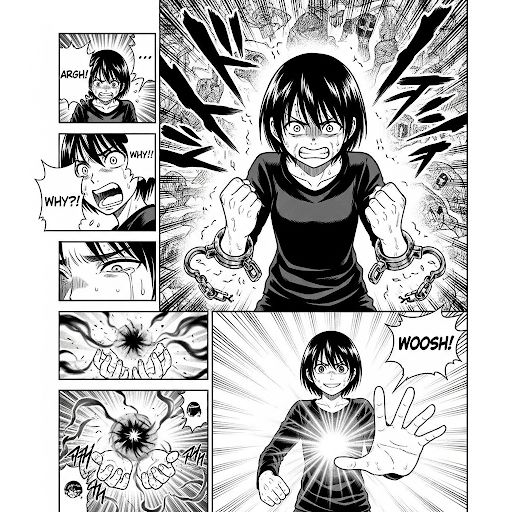
La frustration se déclenche souvent lorsqu’il y a une incapacité d’obtenir ce qui est attendu et désiré. Cette incapacité entraîne une sensation difficile à gérer et peut, avec le cumul, faire exploser de façon irrationnelle de nombreuses personnes.
Nous savons qu’en plus, cette ‘décompensation’ relative peut être orientée sur n’importe qui et n’importe quoi, et surtout de façon inattendue.
Ce qui peut être encore plus difficile : cette incapacité, cette impuissance à avoir satisfaction, entraîne un moment de total mode automatique où, justement, le contrôle, la puissance ou la maîtrise est absent.
Ce qui est souvent une impossibilité issue du monde extérieur, devient une incapacité interne. Ce n’est plus la difficulté et la colère de ne pas répondre à nos désirs, mais la vague destructrice de notre laisser-aller destructeur qui créera la boucle sans fin de culpabilité et puis à nouveau de frustration.
Comme le ‘craving’, réussir à retourner ou plutôt développer une maîtrise des conséquences post-frustration, sans compensation, est une compétence qui peut être développée, une fois de plus dans l’effort, mais qui pourra nous faire accepter que c’est vrai, que nous ne pouvons pas tout avoir quand on veut et même quand on se bat pour.
Sans devenir pessimiste, simplement en utilisant notre frustration comme une bûche dans la forge de nos solutions.
Prenez ce qui est juste et bon pour vous.
Be One Pank
http://www.pank.one/blog
—
Title Pank’s Reflections / Snapshot #425: when frustration multiplies powerlessness
Text Frustration often arises when there is an inability to obtain what is expected and desired. This inability leads to a difficult-to-manage feeling and can, with accumulation, cause many people to explode irrationally.
We know that this relative ‘decompensation’ can also be directed at anyone and anything, and especially in an unexpected way.
What can be even more difficult: this inability, this powerlessness to find satisfaction, leads to a moment of total automatic mode where, precisely, control, power, or mastery is absent.
What is often an impossibility stemming from the external world becomes an internal incapacity. It is no longer the difficulty and anger of not fulfilling our desires, but the destructive wave of our destructive letting go that will create the endless loop of guilt and then frustration again.
Like ‘craving’, succeeding in turning or rather developing a mastery of the post-frustration consequences, without compensation, is a skill that can be developed, once again through effort, but which can make us accept that it is true, that we cannot have everything when we want it, even when we fight for it.
Without becoming pessimistic, simply using our frustration as a log in the forge of our solutions.
Take what is right and good for you.
Be One Pank
http://www.pank.one/blog
 Laboratoire Hypnose